
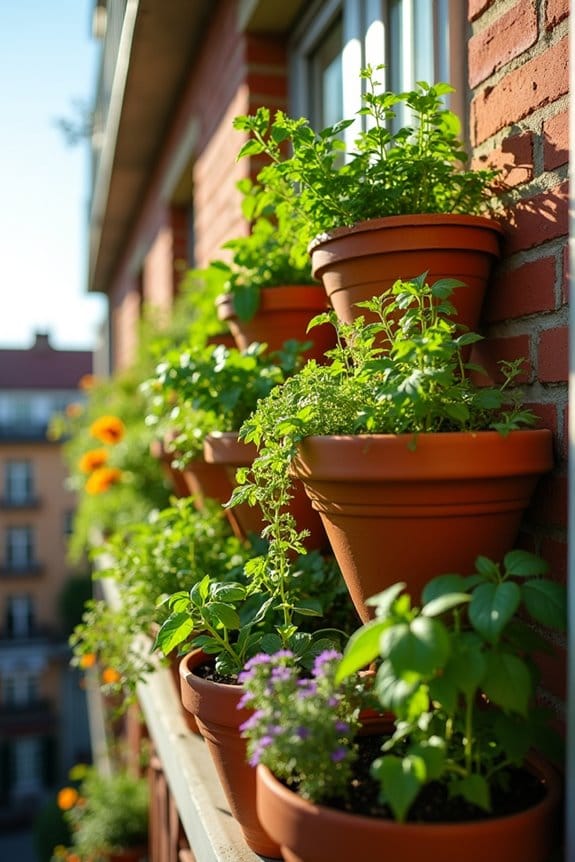

Stacking plant pots is your secret weapon for maximizing limited apartment space. You'll transform vertical areas into thriving gardens by arranging different-sized containers that work together as one unit. This smart setup lets you grow multiple plants like herbs, greens, and small fruits while using less floor space than traditional pots. You'll enjoy easier maintenance at eye level, better drainage management, and a beautiful cascade of greenery. Let's explore how to create your perfect stacked garden sanctuary.
Key Takeaways
- Stacking pots vertically maximizes growing space in small apartments while minimizing the footprint needed for gardening.
- Multi-level arrangements bring plants to eye level, making maintenance and harvesting more convenient for apartment dwellers.
- Stacked systems allow cultivation of multiple plant varieties in limited space, from herbs to small vegetables and flowers.
- Vertical arrangements reduce overall potting soil requirements compared to traditional container gardening methods.
- Stackable designs offer flexibility to move and rearrange plants based on sunlight availability in apartment settings.
Space-Saving Benefits of Stacked Plant Pots
You may be interested
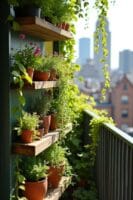
When you're living in a small apartment or working with limited outdoor space, stacked plant pots offer an ingenious solution for creating your dream garden. These space-saving container gardens let you maximize vertical space while minimizing your garden's footprint, making them perfect for balconies and patios.
Stackable planters help you grow more with less space in several ways:
Stackable planters transform limited spaces into thriving gardens, letting you maximize every vertical inch while keeping plants organized and accessible.
- You can cultivate multiple plants in the same vertical column
- The tiered design keeps plant roots organized and separated
- It's easier to water your plants and monitor the moisture levels
- You'll use less potting soil compared to traditional containers
- The elevated arrangement puts plants at eye level for better maintenance
Plus, you can arrange these versatile containers to create privacy screens or decorative garden features while maintaining easy access to all your plants.
Recommended Products

The Deluxe kit for growing with the Tower Garden FLEX system.

💎 Longer Lifespan: Made of 22-gauge 0.8mm thickness corrugated galvanized steel with multi-layer eco-friendly powder coatings. The oval round heavy-duty planter box is strong enough to hold soil for decades.
Best Plants for Vertical Growing Systems
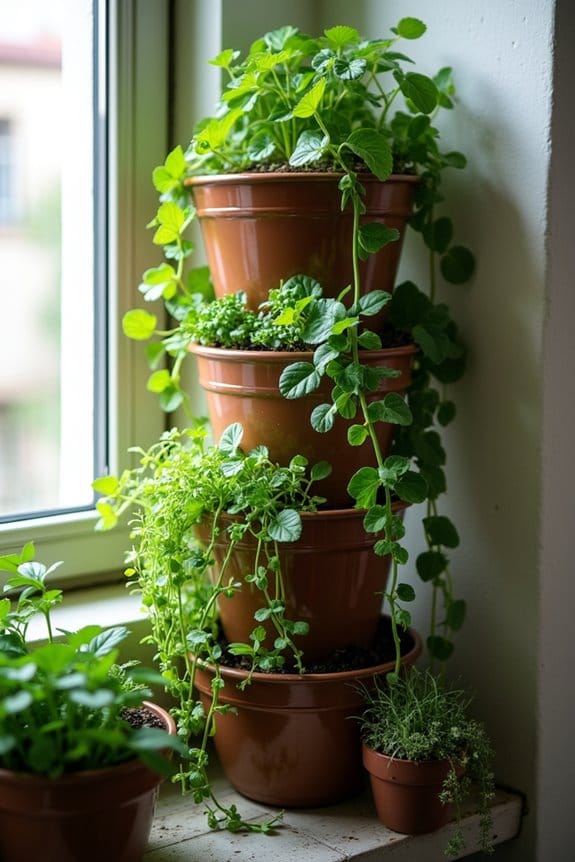
Since vertical growing systems have unique spatial constraints, choosing the right plants is essential for success in your stacked garden. You'll find that herbs like basil, parsley, and mint are perfect choices for your stackable planters because of their compact roots.
When you plant in stackable containers, focus on greens for salads such as lettuce, spinach, and kale. These plants don't need much space and will provide continuous harvests. Small fruits like strawberries and cherry tomatoes work wonderfully in vertical setups, giving you fresh produce throughout the season. Don't forget to include radishes and edible flowers – they'll add variety to your herb garden while maximizing your limited space. Remember to select varieties with shallow root systems to guarantee your plants thrive in their vertical home.
Recommended Products

💎 Longer Lifespan: Made of 22-gauge 0.8mm thickness corrugated galvanized steel with multi-layer eco-friendly powder coatings. Extra thick up to 1.6mm corner panels, two stabilizing rods and four ground stakes to keep your planter box solid and sturdy last for decades.
Setting Up Your First Stacked Garden
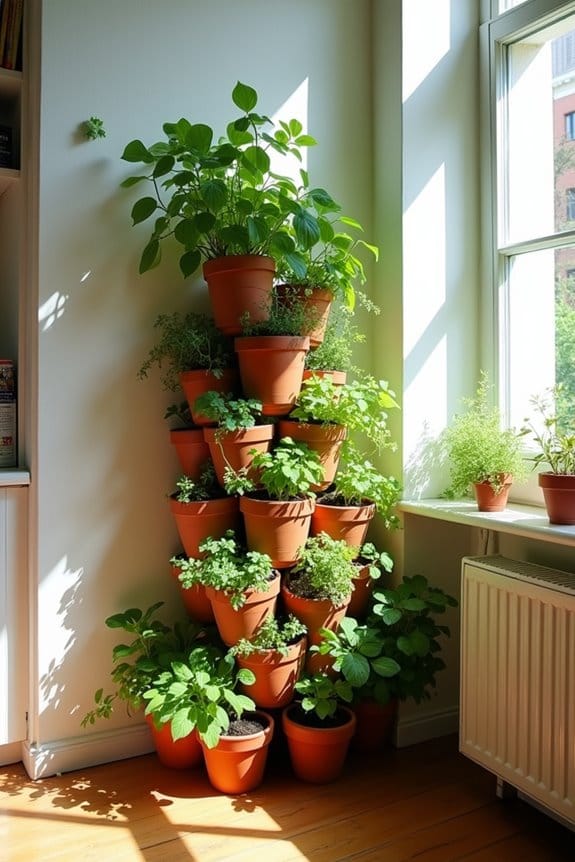
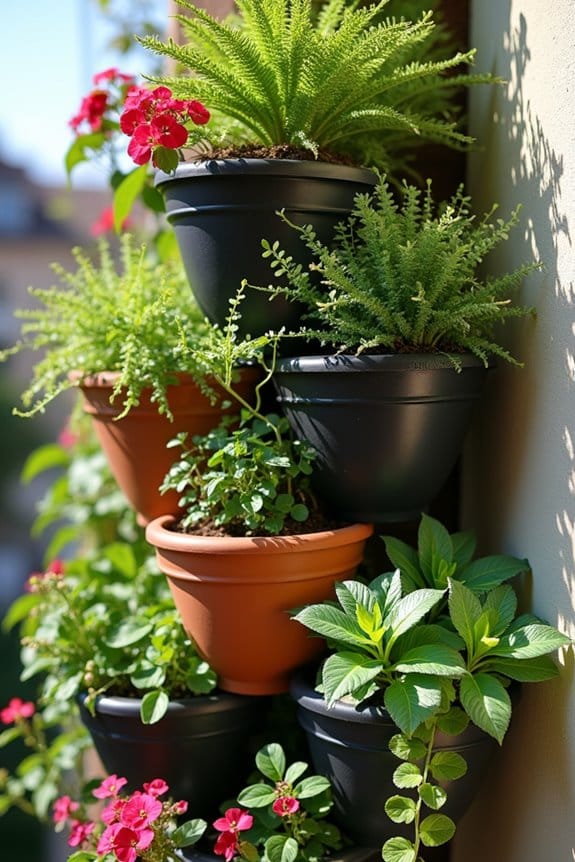
Three simple steps will get your first stacked garden up and running. Start by selecting 2-3 different-sized pots with drainage holes, then fill your largest pot with potting soil – this creates your stable base. Next, stack a smaller pot on top, making sure the holes align for proper water flow.
When choosing plants, think vertically. You'll need one tall thriller plant as your centerpiece, three bushy fillers to add volume, and at least three trailing plants to cascade down the sides. Fresh herbs and salad greens are perfect choices since they don't need deep roots. Your plants need adequate sunlight, so place your creation where it'll get plenty of light. Remember to water regularly and check soil moisture, especially during hot weather. Keep the design lightweight for easy moving and maintenance.
Maintenance Tips for Multi-Level Planters
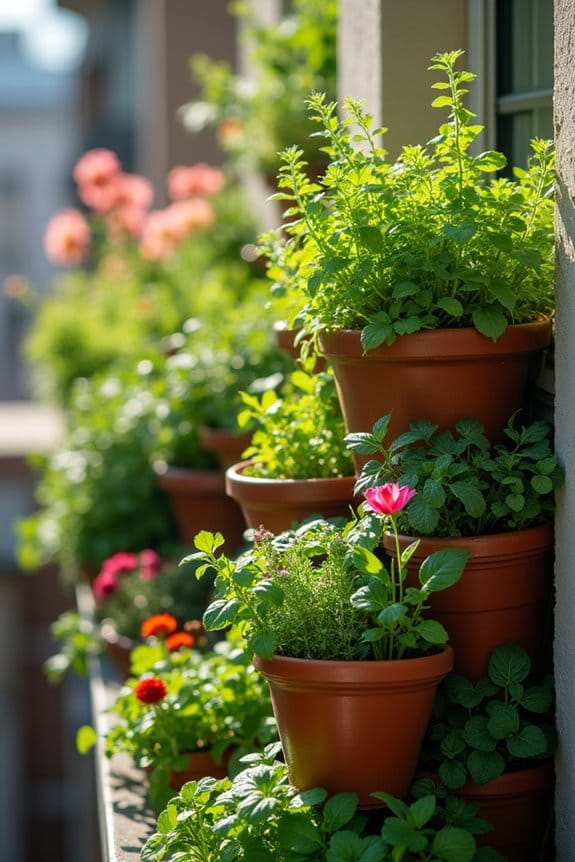
Your stacked garden will thrive with proper ongoing care and attention. Regular maintenance of your multi-level planter starts with moisture management. Check your soil frequently, keeping it moist but never waterlogged, and guarantee the drainage system works effectively through all tiers.
Don't forget to rotate your plants periodically, as upper levels typically receive more sunlight than lower ones. You'll get more even growth this way. When it comes to soil, use a lightweight potting mix that's easy to work with, especially if your planter has wheels. This makes maintenance much simpler. To keep your plants healthy, add slow-release organic fertilizer every few months. The regular care routine for your garden should include checking drainage holes for clogs and monitoring each level's moisture balance.
Design Ideas for Apartment-Friendly Arrangements
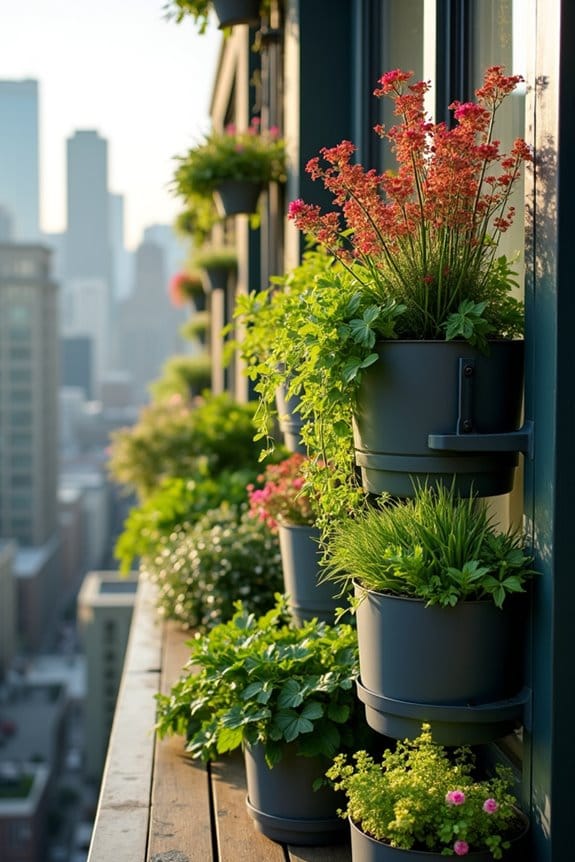
When space is limited in apartment living, stacking your plant pots creates endless design possibilities. With stackable planters, you'll maximize your growing area while creating stunning vertical displays that draw the eye upward.
Try mixing plant combinations that work together in a tier planter system. Place sun-loving herbs at the top where they'll get plenty of light, and arrange shade-tolerant plants below. You can grow colorful flowers alongside small amounts of vegetables to add both beauty and function. During hot weather, position trailing plants at the bottom tiers to create a cascading effect that adds visual interest to your space.
For the best results, vary your pot sizes within the arrangement. This allows you to accommodate different plant types while creating a dynamic, multi-dimensional garden that fits perfectly in your apartment setting.
Recommended Products

Seedling Starter Kit (includes: germination tray, rockwool cubes, vermiculite, net pots, and a variety of seeds for leafy greens, lettuces and herbs)

Vertical Aeroponics Tower for growing a wide variety of vegtables, flowers, and herbs. Lots of customer support from the manufacturer - Tower Garden. Get growing with us today.

Aeroponics Tower from Tower Garden. There are a lot of imatations but this is the real deal!
Frequently Asked Questions
What Are Stackable Planters Good For?
In your wildly cramped space, stackable benefits shine through vertical gardening magic. You'll love these space saving solutions for urban gardening, offering decorative options and plant diversity while maximizing every precious inch available.
What Grows Best in Stackable Planters?
You'll have great success growing compact herb varieties, salad greens, and small vegetables like radishes. Don't forget strawberries and cherry tomatoes – they thrive when properly spaced and given adequate sunlight in stackable planters.
How Do You Keep Plants in a Small Apartment?
Like a vertical jungle, transform your tiny space through indoor gardening by optimizing corners with stackable planters. Select plants based on light requirements, maintain consistent watering techniques, and watch your apartment garden flourish.
What Is the Most Common Mistake Made With Container Plants?
You'll find overwatering plants is the most common container gardening mistake. While potting soil selection, light requirements, drainage issues, pest management, and plant compatibility matter, excess water typically causes the most problems.


