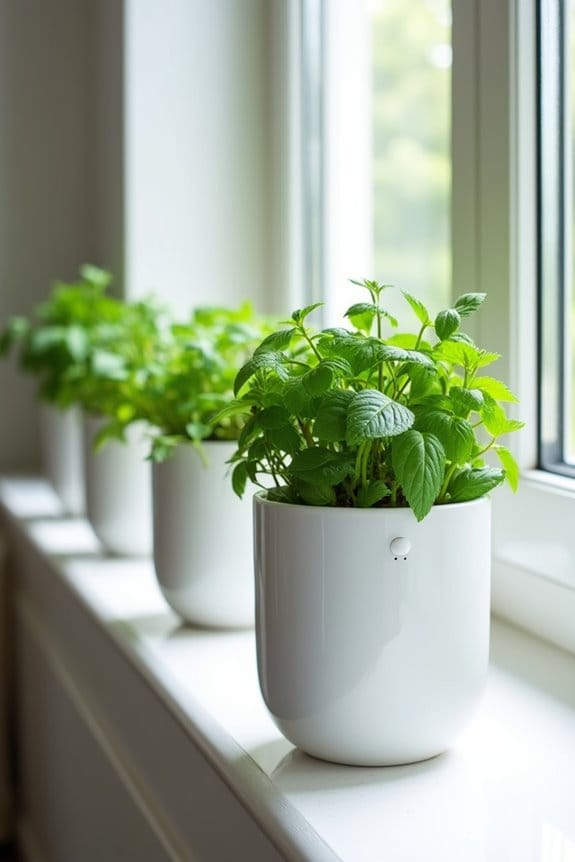
Your pothos will thrive in a well-draining soil mix that combines equal parts peat moss, perlite, and vermiculite (1:1:1 ratio). This light, fluffy blend provides ideal aeration while retaining just enough moisture for healthy root development. Add a generous portion of compost to supply essential nutrients, and make certain your soil's pH stays between 6.1 and 6.8. Monitor drainage carefully – if water pools on top, you'll need to adjust your mix to prevent root problems. There's much more to perfecting your pothos' growing environment.
Key Takeaways
- A well-draining mixture of equal parts peat moss, perlite, and vermiculite creates the ideal pothos soil environment.
- The soil pH should stay between 6.1 and 6.8 for optimal nutrient absorption and root health.
- Adding compost to the soil mix provides essential nutrients and promotes beneficial microbial growth.
- Light, fluffy soil texture prevents compaction and allows proper aeration for healthy root development.
- Use pots with drainage holes and soil that dries slightly between waterings to prevent root rot.
Understanding Pothos Soil Requirements

You may be interested



While many houseplants can adapt to different soil conditions, pothos plants need specific soil characteristics to truly thrive. Your pothos will flourish in well-draining soil that combines peat moss, perlite, and nutrient-rich components. This mixture guarantees proper moisture retention while preventing waterlogged roots that can lead to root rot.
You'll want to maintain a soil pH level between 6.1 and 6.8, which helps your pothos absorb essential nutrients efficiently. The ideal soil should feel light and fluffy when you touch it, never heavy or compacted. As you care for your pothos, remember to let the soil dry slightly between waterings. This practice encourages healthy root development and prevents common problems that occur with dense, poorly-draining soils. Watch for signs that your soil is too heavy, like slow drainage or surface crusting.
Essential Components of an Ideal Pothos Mix

Creating the perfect pothos soil mix requires combining several crucial components in the right proportions. You'll want to start with equal parts peat moss, perlite, and vermiculite in a 1:1:1 ratio. This balanced combination guarantees ideal moisture retention while maintaining proper drainage for your plant's roots.
Perlite plays an essential role in soil aeration, preventing the mix from becoming too compact. You'll find that vermiculite helps retain just the right amount of moisture without waterlogging your pothos. Don't forget to add compost, which provides important nutrients and promotes healthy microbial activity. For best results, make certain your soil mix maintains pH levels between 5.5 and 7.5. This range allows your pothos to effectively absorb nutrients and maintain strong, healthy growth.
Recommended Products
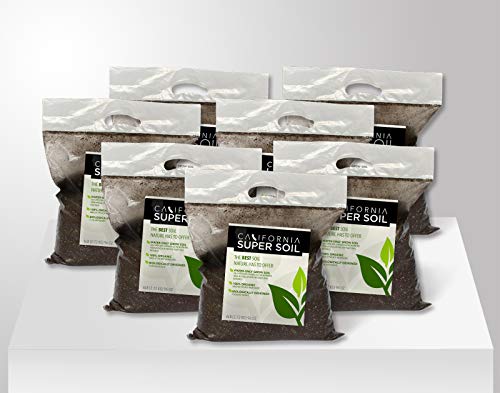
5% SOIL AND 95% NUTRIENTS: California Super Soil is a highly concentrated super soil designed specifically for vegetating and flowering plants. California Super Soil allows growers to achieve higher yeilds while also making the growing process cheaper and easier!

Coarse Horticultural Perlite: 4 pack large-grade perlite designed for potting soil, seed starting, propagation, hydroponics, organic gardening, and specialty plant mixes
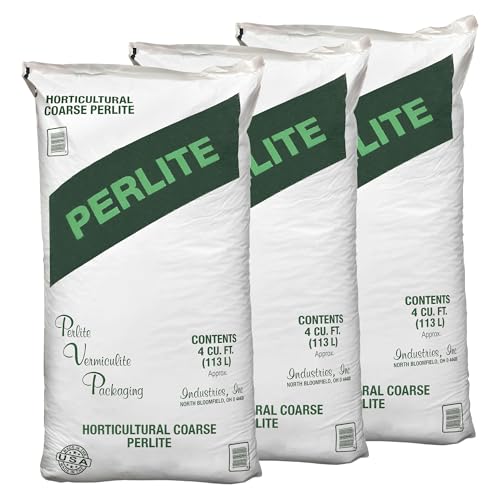
Promotes strong root development by enhancing aeration and drainage—essential for healthy plant growth in pots, gardens, and hydroponic systems
Creating the Perfect Soil Blend at Home

Making your own pothos soil blend at home isn't just cost-effective – it's also the best way to guarantee your plant gets exactly what it needs. Start by mixing equal portions of peat moss, perlite, and vermiculite in a clean container. These components work together to create ideal moisture retention and drainage for your pothos.
Next, add a generous helping of compost to provide essential nutrients that'll support healthy growth. The mixture should feel light and fluffy when you're done. To confirm proper root health, check that your blend maintains a slightly acidic pH between 6.1 and 6.8. You can test this using a simple soil pH meter.
Remember to aerate your mix occasionally by gently stirring it before use, and never reuse old potting soil or garden soil for your pothos plants.
Recommended Products

FEEDS UP TO 6 MONTHS: Miracle-Gro Potting Mix is a gardening soil for outdoor containers that feeds all types of potted plants, including flowers, vegetables, shrubs, annuals, and perennials for up to 6 months

FEEDS UP TO 6 MONTHS: Miracle-Gro Moisture Control Potting Soil Mix feeds plants for up to 6 months and Grows Plants Twice As Big (vs unfed plants)

You will receive (10) 2-cubic foot bags of potting soil per purchase.
Signs Your Pothos Soil Needs Adjustment

Even with the perfect soil mix, your pothos will let you know when something's not quite right. Yellowing leaves and soft spots on the plant are major warning signs that your soil needs attention. When you notice these symptoms along with consistently wet soil, you're likely dealing with overwatering issues and poor drainage.
Watch for these key indicators that it's time to adjust your pothos soil:
- Soil staying wet for more than 10 days, even with drainage holes
- Dark, squishy stems or soft brown spots pointing to root rot
- Yellowing leaves combined with stunted growth, suggesting nutrient deficiencies
- Compact soil that doesn't drain properly
If you spot these issues, it's time to repot your pothos in fresh, well-draining soil. This will help prevent moisture problems and guarantee proper nutrient uptake.
Seasonal Soil Considerations for Pothos

While your pothos care routine remains largely consistent year-round, you'll need to make key soil adjustments as the seasons change. During spring and summer, use a nutrient-rich soil mix with equal parts peat moss, perlite, and compost to support active growth. Your potting mix should maintain good drainage while holding enough moisture.
As temperatures drop in fall and winter, you'll want to adapt the soil for your pothos to accommodate seasonal temperature fluctuations. Focus on creating ideal soil conditions that prevent waterlogging while still retaining adequate moisture. Monitor the soil's pH level, keeping it between 6.1 and 6.8 throughout the year. If you notice your pothos struggling with seasonal changes, don't hesitate to repot the plant using a fresh mix that's better suited to current conditions.
Managing Soil Moisture and Drainage
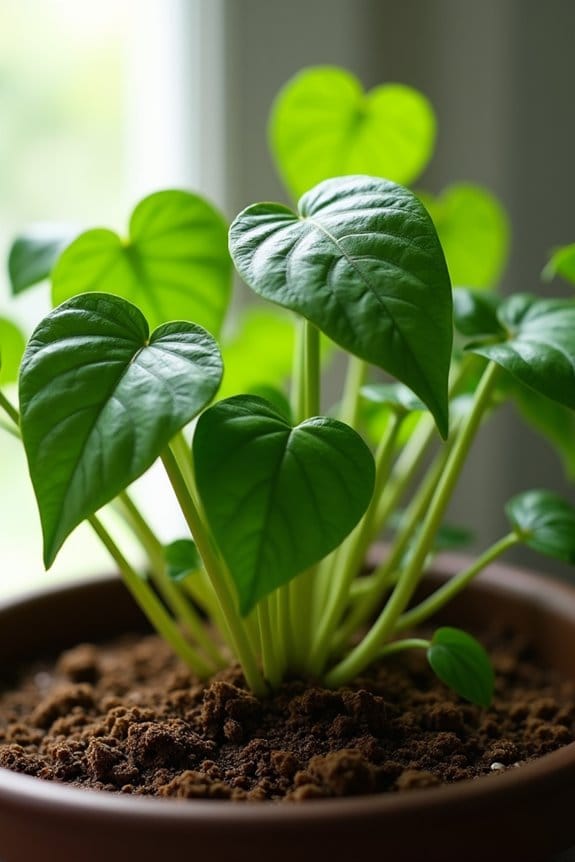
Successful pothos care depends heavily on maintaining the right balance of soil moisture and drainage. The best soil for pothos combines equal parts peat moss, perlite, and vermiculite to create a well-draining mix that prevents waterlogging while ensuring proper moisture retention.
You'll need to monitor soil moisture levels regularly by checking the top inch of soil with your finger. When it feels dry, it's time to water. Always use a pot with drainage holes to let excess water escape and promote healthy root development. Without proper aeration and drainage, your pothos risks developing root rot.
If you notice your fresh potting mix isn't draining well, mix in additional perlite to improve drainage. Remember, it's better to underwater than overwater – your pothos will bounce back more easily from dry conditions than from soggy soil.
Recommended Products

NATURAL, ORGANIC INGREDIENTS: Made of 100% organic ingredients, this organic potting soil is free from synthetic fertilizers and chemicals. This planting soil gives your plants everything they need. Perfect for soil for indoor plants and outdoor potting soil.

IDEAL FOR HORTICULTURE - Our soil amendment is tailored to meet the needs of both gardening enthusiasts and professionals. Crafted with precision for modern gardening practices, it is an indispensable and versatile component for all your gardening ventures. Its remarkable capacity to improve soil aeration, maintain essential moisture and nutrients, and accelerate root growth makes this vermiculite for mushrooms the essential ingredient.

2 Pack, 4 cubic foot each bag
Soil Amendments and Nutrient Balance
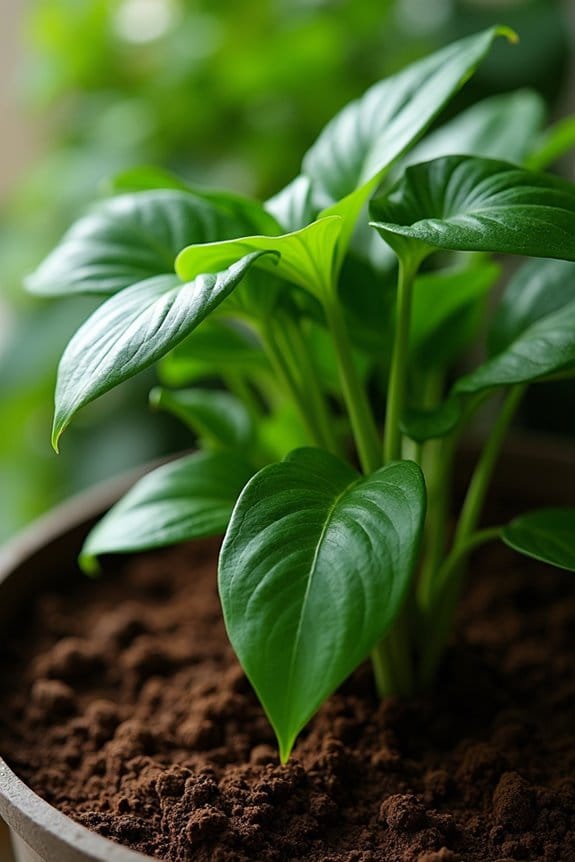
Beyond proper drainage, your pothos needs the right blend of nutrients to reach its full potential. Creating a well-draining soil mix with proper moisture retention starts with combining equal parts peat moss, perlite, and vermiculite. You'll want to enrich this foundation with nutrient-rich compost to support healthy growth.
To maintain ideal nutrient levels for your pothos, follow these key practices:
- Monitor soil pH between 6.1 and 6.8 to guarantee essential nutrients remain available
- Apply balanced fertilizer every 2-3 months during growing season
- Mix in fresh compost when repotting to replenish crucial minerals
- Maintain equal ratios of peat moss, perlite, and vermiculite when preparing soil
This balanced approach to soil amendments will keep your pothos thriving with lush, vibrant foliage throughout the year.
Recommended Products

You will receive (4) 1.5-cubic foot bags per purchase.

Versatile Philodendron Soil Mix: Perfect for a wide range of popular varieties of Philodendron, including Pink Princess, White Wizard, Moonlight, and Prince of Orange. Our premium blend of Peat Moss, Perlite, and Aged Bark provides the ideal environment for lush, healthy growth and vibrant foliage.

Horticultural super coarse vermiculite is permanent, clean, odorless, non-toxic, sterile and pH neutral. It will not deteriorate, turn moldy or rot. It is typically mixed with soil, peat, composted pine bark, fertilizers, pesticides and herbicides and promotes faster root growth and quick anchorage to young roots.
Repotting With the Right Soil Mix
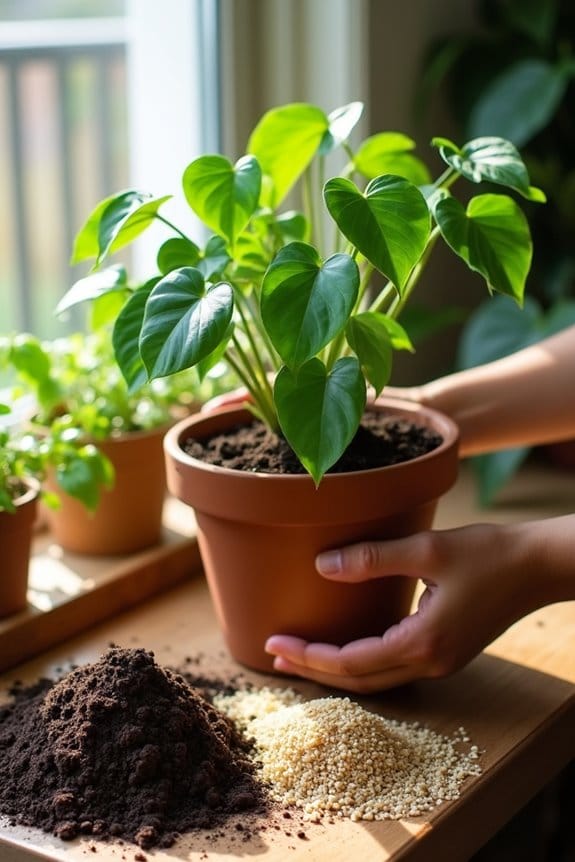
As your pothos outgrows its current home, you'll need to carefully consider the repotting process and soil mixture to guarantee continued healthy growth. When selecting potting soil, create a well-draining soil mix using equal parts peat moss, perlite, and vermiculite to provide ideal moisture retention for your plant.
Choose a container with drainage holes that's slightly larger than the current root ball. If your plant is root-bound, gently loosen tangled roots before placing it in fresh soil. Center the plant in its new pot and fill around it with your prepared mix. Water thoroughly until you see drainage from the bottom, which helps eliminate air pockets.
Remember to repot every 1-2 years to provide fresh nutrients and adequate space for your healthy plant to thrive.
Recommended Products

FOR IN-GROUND USE: Use this all-purpose garden soil for vegetables and flowers to amend garden beds or for planting individual plants including herbs, annuals, perennials, trees, and shrubs
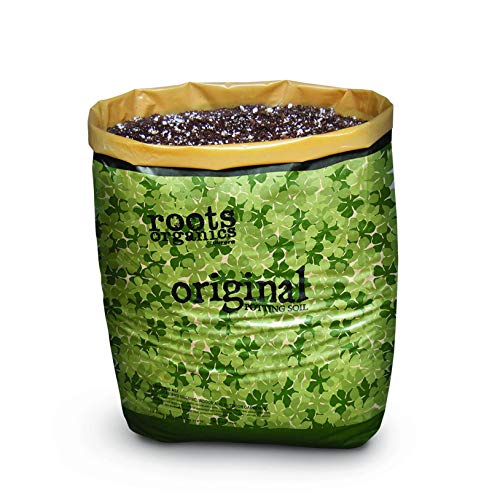
10 GALLON POTTING SOIL: 10 pack of 10 gallon (1.5 cu Ft) of Roots Organics Coco-Fiber Original Potting Soil for your hungry plants

You will receive (10) 1.5-cubic foot bags of potting soil per purchase.
Troubleshooting Common Soil Issues

Three common soil problems can plague your pothos plants, but they're all fixable with the right approach. Watch for yellow leaves and soggy soil, which often indicate overwatering or poor drainage. If you notice dark spots and soft tissue, you might be dealing with root rot, requiring immediate action with fresh, well-draining soil.
Keep your pothos healthy by monitoring soil conditions – yellow leaves and dark spots signal problems, but quick action ensures recovery.
Monitor your plant's health by following these essential steps:
- Check soil moisture weekly, ensuring it doesn't stay wet for more than 10 days
- Inspect roots monthly for signs of rot, removing affected areas promptly
- Address nutrient deficiencies by adding balanced fertilizers when leaves pale
- Practice regularly aerating the soil to maintain proper nutrient balance
These preventive measures will help maintain ideal growing conditions and keep your pothos thriving in their indoor environment.
Frequently Asked Questions
What Is the Best Soil Mix for Pothos Indoors?
You'll find your pothos thrives in a mix of equal parts peat moss, perlite, and vermiculite. This combination guarantees ideal drainage, moisture control, and nutrient retention while maintaining the perfect 6.1-6.8 pH level.
Do Pothos Like Used Coffee Grounds?
Yes, your pothos can benefit from used coffee grounds when used sparingly. They'll improve drainage and add nutrients, but don't overdo it – mix small amounts into the soil or compost to avoid excessive acidity.
Do Pothos Like Wide or Deep Pots?
You'll want to choose a wide pot over a deep one for your pothos, as they prefer spreading their roots horizontally. A 10-12 inch diameter pot with good drainage will support healthy root growth.
What Should I Repot My Pothos In?
Choose a pot with drainage holes slightly larger than your Pothos' root ball. Use fresh potting soil mixed with equal parts peat moss, perlite, and vermiculite. Repot every 1-2 years for ideal root health.