
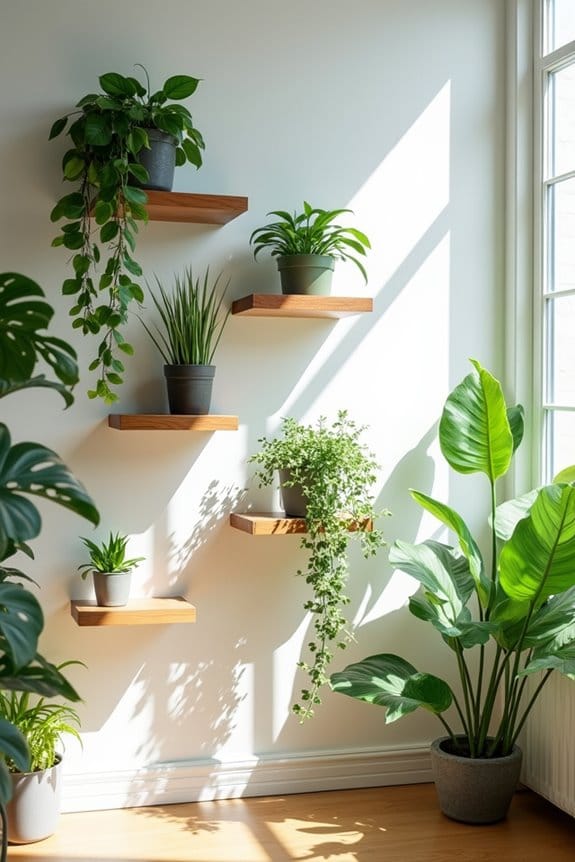

For healthy indoor plants, you'll want to space pots 6-12 inches apart on shelves while maintaining 12-24 inches of vertical clearance between levels. Position your tallest plants on top shelves to prevent shadowing, and keep climbing varieties at least 12-18 inches apart horizontally. Guarantee each shelf level receives adequate light by adjusting heights based on plant size and growth patterns. Strategic grouping and proper spacing form the foundation for your plants' success, with plenty more techniques to explore.
Key Takeaways
- Allow 12-18 inches of vertical space between shelf levels to ensure proper light distribution and plant growth.
- Space pots 6-12 inches apart horizontally to maintain adequate airflow and prevent overcrowding.
- Position tallest plants on upper shelves to prevent shadowing smaller plants below.
- Group plants with similar light and spacing requirements together for efficient maintenance and care.
- Use adjustable shelving systems to accommodate growing plants and maintain 12-24 inches clearance for taller specimens.
Essential Measurements for Shelf Plant Spacing
You may be interested
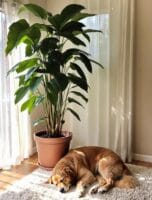
When you're setting up plants on shelves, proper spacing is essential for their long-term health and growth. Plant spacing of 6-12 inches between each pot creates adequate space for good airflow and helps prevent disease from excess moisture.
For your taller plants, make sure to reserve spots on upper shelves with at least 12-24 inches of vertical clearance above them. Pay attention to light requirements when arranging different plant heights – you don't want larger plants casting shadows on smaller ones below. As your plants grow, you'll need to monitor and adjust their positions regularly.
Consider creating a flexible layout that allows you to easily move plants as they mature. This approach lets you maintain ideal growing conditions while keeping your plant shelf display looking balanced and healthy.
Recommended Products
Great for lounging and to give your cats their own space

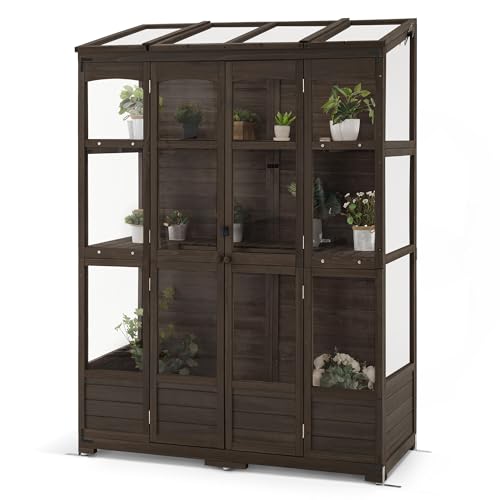
[Spacious Walk-in Design for Gardeners] Elevate your gardening experience with this 57.9"x29.1"x78.1" walk-in greenhouse. The roomy interior and double-door design offer ample space to move freely, making it a perfect outdoor greenhouse for tending to tall plants, saplings, and herb gardens without feeling cramped.
Light Distribution and Plant Shelf Arrangement
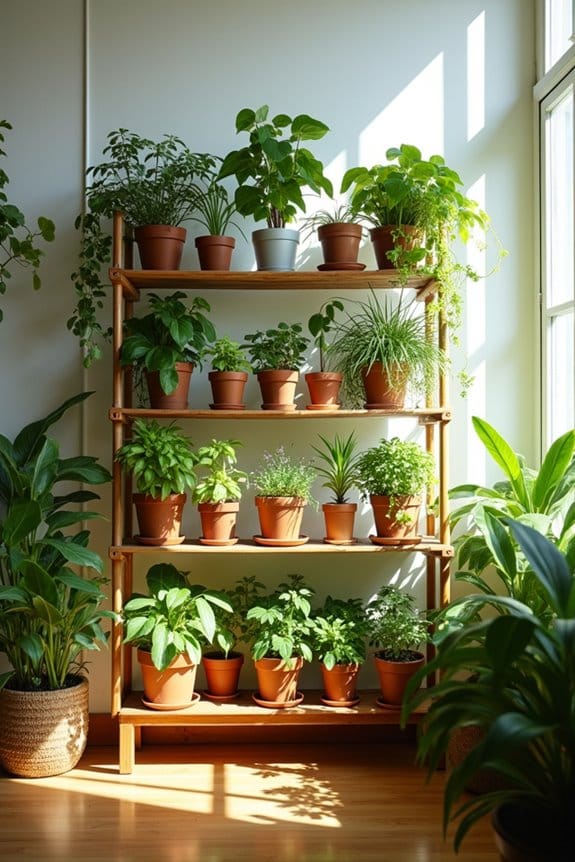
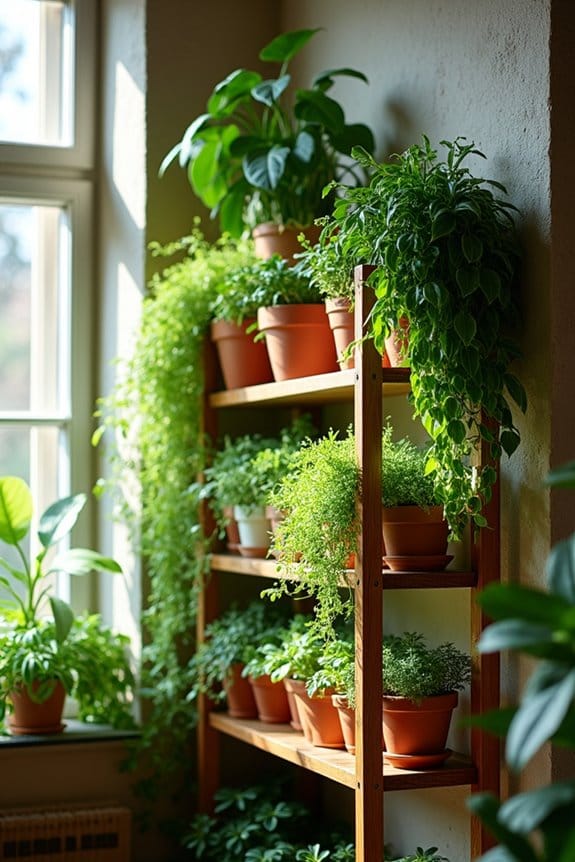
Since proper light distribution can make or break your indoor garden's success, strategic shelf arrangement is essential for healthy plant growth. When setting up your plant shelves, you'll want to maintain 12-18 inches of vertical space between levels to guarantee adequate light reaches every plant.
Start by placing your tallest plants on the top shelves, then arrange shorter ones below. This prevents larger plants from casting shadows on their smaller neighbors. Position your shelves where they'll receive uniform light coverage, whether from windows or grow lights. Don't forget to rotate your plants regularly to promote even growth on all sides.
For the best light distribution in your plant shelf arrangement, consider how sunlight moves through your space throughout the day. You'll need to adjust shelf positions accordingly to maximize exposure for all your green friends.
Recommended Products

🪴5 Lighting Modes for Every Stage: The 5 adjustable modes allow you to tailor the light for seedlings, greens, fruit, herbs, houseplants, and microgreens. Plus, “Sleep Mode” and Auto Night Cycle make plant care effortless — even while you sleep.

CLEAR DOMES FOR OPTIMAL PROPAGATION: Tailored for seed, clone, and cutting propagation, our thin-wall dome offer a perfect balance of lightweight ease and enduring durability. Transparent for easy monitoring, these humidity domes for plants create an ideal environment for healthy germination and robust cloning. Suitable for both novice and experienced gardeners, humidity dome provides optimal conditions for seedling.

【Upgraded Light-Blocking Design】Equipped with both a clear viewing curtain and a blackout curtain. Easily check plant growth without opening the enclosure, while the blackout layer prevents light leakage and helps maintain a stable growing environment.
Vertical Growing Space Requirements
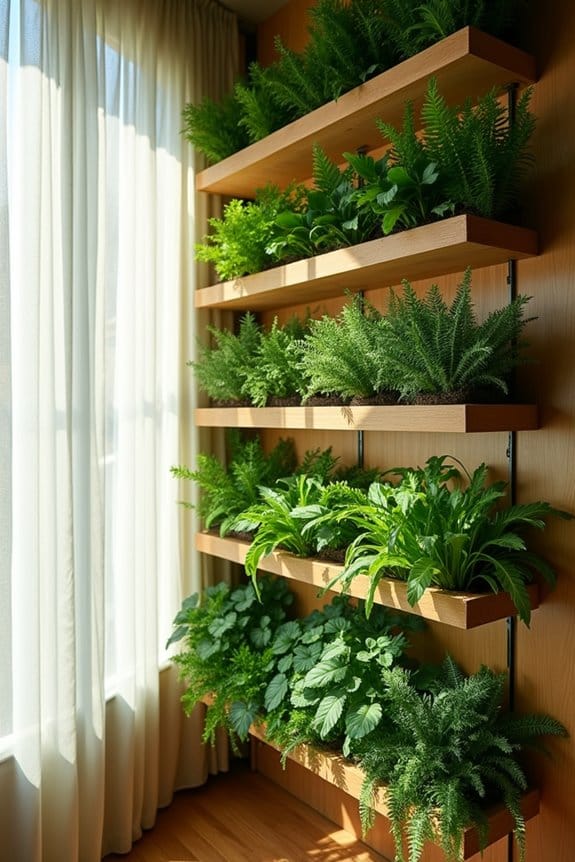
With proper light management in place, let's explore how much vertical space your plants need to reach their full potential. Vertical gardening requires careful attention to space requirements, especially when working with climbing varieties. You'll need at least 5-6 feet of height for most climbing plants to grow successfully.
Don't place your plants too close together, as this can lead to problems. Keep them 12-18 inches apart horizontally to guarantee good airflow and prevent competition for resources. Your vertical setup should include sturdy support systems like trellises, stakes, or netting to help plants stay upright as they grow taller. Remember to take into account light exposure when arranging your vertical garden – each plant should receive adequate sunlight without blocking light from reaching neighboring plants below.
Recommended Products

🛡️ Optimal Growth Protection: Create the perfect microclimate with our 4mm twin-wall polycarbonate panels. These shatter-resistant sheets transmit 70% of natural light while blocking 99.9% of harmful UV rays—making this outdoor greenhouse a safe, productive haven that prevents plant burn and extends your growing season.
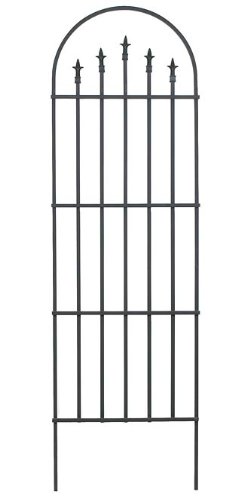
Panacea Trellis Arch with Finial 80" H X 24" W Black Boxed5
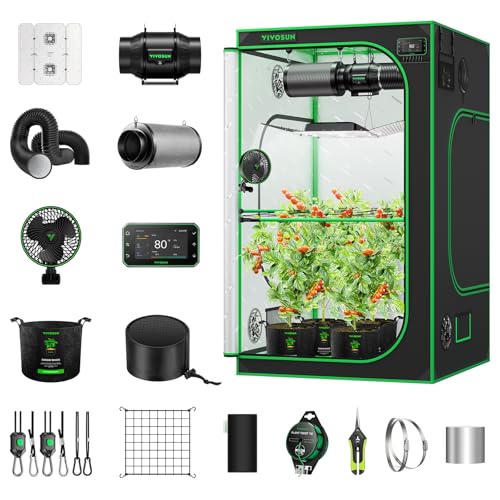
Plus Grow Tent Kit: A professional choice that simplifies indoor gardening and maximizes growth potential; Includes a premium grow tent, tunable spectrum grow light, ventilation & circulation system, smart GrowHub, and essential accessories—all in one to support healthy growth and higher yields
Shelf Design and Plant Size Compatibility
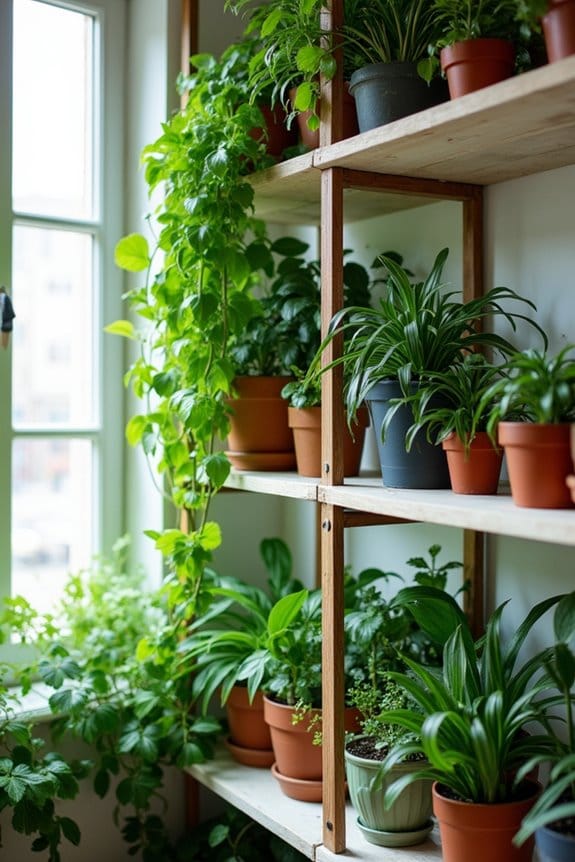
Designing shelves that match your plants' size requirements is essential for their long-term success. When planning your shelf design, you'll want to maintain 12-18 inches between levels to guarantee proper light exposure and air circulation for your growing plants. Remember that a small succulent today could become much larger tomorrow.
Consider incorporating adjustable shelving to accommodate your plants as they mature. You can group plants with similar needs together, making it easier to care for them effectively. Use dividers or trays to create designated spaces that prevent larger plants from overshadowing smaller ones. For instance, keep your towering fiddle leaf fig on a separate shelf from your compact succulents. This approach to plant size compatibility helps every plant receive the space and resources it needs to thrive.
Recommended Products

【55"W Extra Wide Storage Space】Measuring 55.5" W x 24" D x 81" H, this heavy duty garage shelves provide generous room to keep your space neat and organized. The wide rolling shelves help simplify sorting and categorizing, keeping everyday essentials easy to see, access, and manage. Perfect for storing in garage, warehouse, basement, commercial, kitchen, pantry, closet, laundry room, living room, library, school, shed, shop, office, garden, restaurant.

3-Color Lamp. Adjust the RLPI Beverage and Wine Fridge red, green, and blue colors according to your preferred atmosphere in the kitchen, room, and living room. Green plant atmosphere, blues style, e-sports passion, and more.

Large Storage Space: This walk-in polycarbonate greenhouse has two-tier shelves that provide enough space to organize your plants and small planting tools (Overall Dimension: 57.9" x 28.5" x 80.5")
Strategic Plant Grouping for Optimal Growth
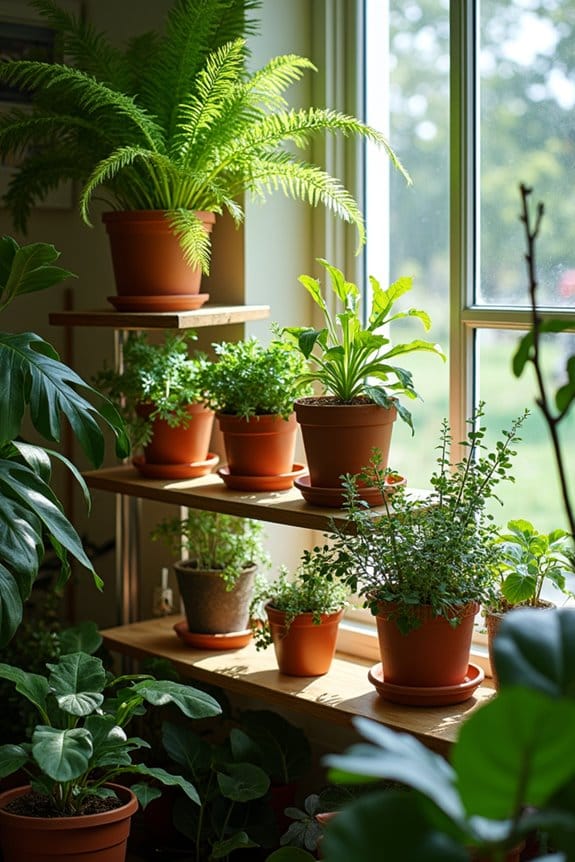
Smart plant grouping is the next step in creating your successful shelf garden. To help your plants grow at their best, you'll need to implement strategic grouping that gives each variety the space it needs to thrive.
Start by consulting a spacing chart to determine proper distances between different plant types. You'll want to maintain adequate air circulation by avoiding overcrowding – remember that plants need room to breathe just like we do. For ideal growth, position larger plants like tomatoes 12-36 inches apart, while smaller vegetables can be placed closer together. If you're working with limited shelf space, consider using vertical growing techniques and trellises. This approach lets you maximize your growing area while ensuring each plant has enough room to develop properly. Always group plants with similar spacing needs together for easier maintenance.
Recommended Products

Explore The Ultimate Outdoor Living Space - Enhance your garden or backyard with our 12x20 wood pergola. Made of high-quality cedar wood, it provides a spacious area for leisure and entertainment. Its water-resistant stain ensures durability and timeless elegance, making it a perfect complement to any outdoor environment

Material: Crafted from durable BPA/phthalate-free vinyl

Sturdy Solid Cedar Construction: The entire patio pergola with sturdy and corrosion-resistant frame, is constructed from solid nature cedar wood. Due to its moisture-resistant qualities, the pergola can withstand kinds of weather conditions. Moreover, it is strongly advised to use extra water-based staining, which can not only improve better protection but also prolong the lifespan of the pergolas
Frequently Asked Questions
How Much Space Between Microgreen Shelves?
You'll find that successful growers like Urban Greens maintain 4-6 inches between microgreen shelves for ideal growth. This spacing guarantees proper light requirements, air circulation, and easy harvesting while accommodating various shelf heights.
How Far Should You Space Plants Apart?
You'll need to follow specific spacing guidelines for ideal growth, ranging from 3-36 inches depending on plant type. Proper spacing guarantees good light exposure, air circulation, and reduces plant competition for resources.
How Far Apart Should Plant Rows Be?
Like soldiers in formation, your plant rows need strategic spacing: 24-36 inches for Brussels sprouts, 60 inches for cucumbers, and 36-48 inches for squash. Proper row planning optimizes your garden's yield and accessibility.
What Is the Formula for Plant Spacing?
You'll want to take into account plant growth and root development when spacing. Follow spacing guidelines of 1.5-2 times the mature width, ensuring adequate light requirements and air circulation between each plant for ideal health.


