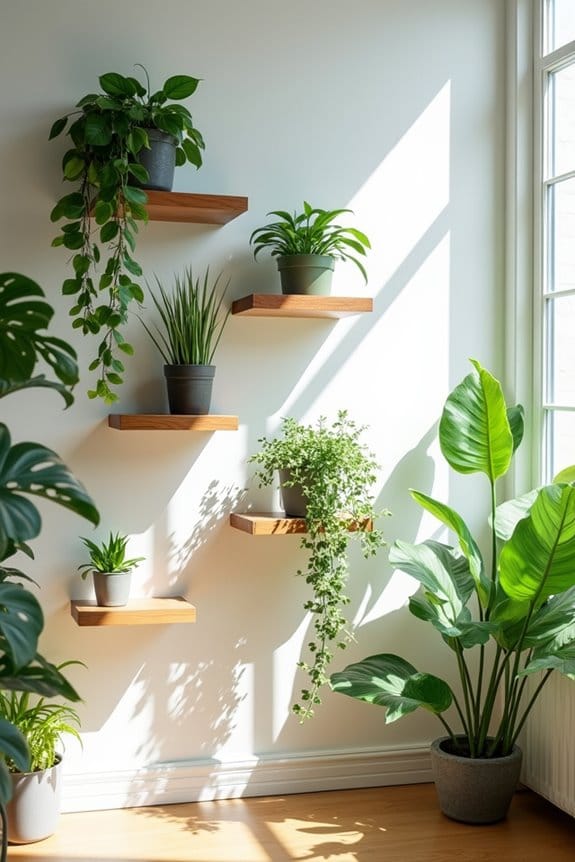
For the best indoor plant placement, understand your home's natural light patterns. South-facing windows provide intense sunlight perfect for succulents and cacti, while north-facing spots suit low-light plants like snake plants. East-facing windows offer gentle morning sun ideal for pothos and ferns, and west-facing areas provide bright filtered light for adaptable species. You can test light levels by observing shadow strength – crisp shadows indicate bright light, while soft outlines suggest indirect light. There's much more to explore about optimizing your indoor garden's lighting conditions.
Key Takeaways
- Place sun-loving plants like succulents near south-facing windows for maximum direct sunlight exposure throughout the day.
- Position low-light tolerant plants such as snake plants and ZZ plants near north-facing windows.
- Use east-facing windows for plants needing moderate light, including pothos and ferns, to receive gentle morning sun.
- Perform the shadow test to assess light levels: crisp shadows indicate bright light, while soft shadows suggest indirect light.
- Group plants with similar light requirements together and use sheer curtains to filter intense sunlight when needed.
Understanding Natural Light in Your Home

You may be interested
Understanding natural light patterns in your home is the key to helping your indoor plants thrive. Your windows' orientation plays a significant role in determining light levels throughout your space. South-facing windows provide intense natural sunlight, perfect for sun-loving varieties, while north-facing windows create low-light conditions ideal for shade-tolerant plants.
For medium-light plants, east-facing windows offer gentle morning sun and indirect light throughout the day. Light intensity can vary due to external factors like trees and buildings, so you'll need to adjust plant placement accordingly. Remember that seasonal changes affect how much light your plants receive, making regular monitoring essential. Try the shadow test to assess your home's light conditions: sharp shadows indicate bright light, while fuzzy ones suggest indirect light—perfect for most indoor plants.
The Window Direction Guide for Plant Success

Four distinct window orientations in your home create unique light environments that can make or break your indoor gardening success. Your North-facing window is perfect for low-light tolerant plants like snake plants, while East-facing windows provide bright indirect light ideal for adaptable favorites such as pothos and ferns.
If you've got sun-loving plants, place them near a South-facing window where they'll receive direct sunlight throughout the day. Just remember to protect them from intense summer rays. West-facing windows offer a mix of bright indirect light and afternoon sun, making them suitable for versatile plants like peace lilies and philodendrons. Understanding light patterns from each window direction will help you match your plants to their preferred conditions, ensuring they thrive in their new homes.
Recommended Products
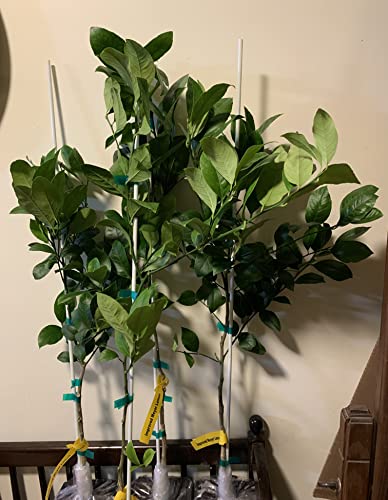
USDA State Regulations, Cannot Ship to: Alaska, Arizona, California or Hawaii

Native to the rainforests of Southern Mexico and Guatemala, the Neanthe Bella Palm (Chamaedorea elegans) or Parlor Palm is known for its air purifying properties and ability to adapt to lower light conditions.

UV-Resistant – Vivatrees artificial cedar trees use UV-inhibited materials to keep leaves lush and green season after season, even in south-facing windows or sunny patios.
Shadow Testing Your Room's Light Levels
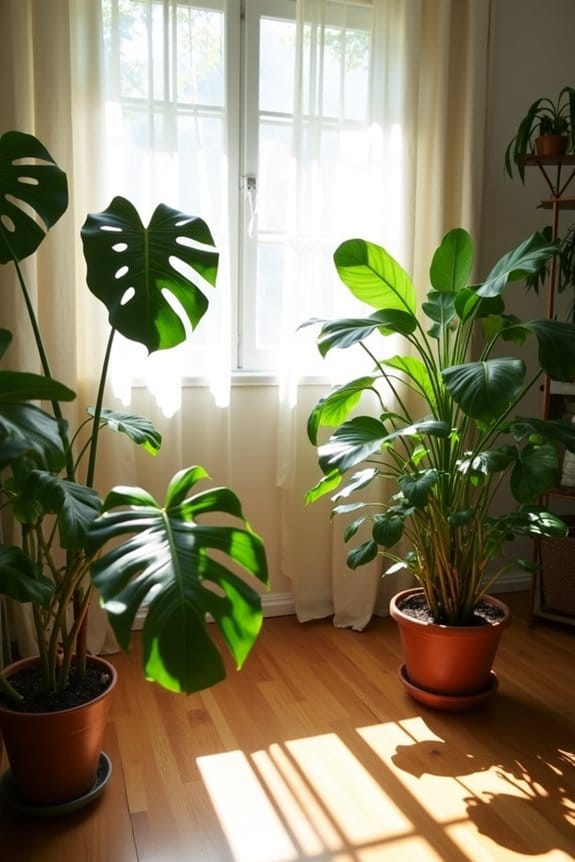
Once you've identified your window directions, you'll want to assess exactly how much light reaches different spots in your room. The shadow test is a simple but effective way to determine light levels throughout the day.
Check your room at different times to observe shadow patterns. Strong, crisp shadows indicate bright light or direct sunlight, while visible but softer outlines suggest bright, indirect light. Look for faint shadow outlines that signal medium light conditions. Areas with diffuse shadows and no distinct outlines are your low-light areas. Since light intensity changes throughout the day, repeat this test morning, noon, and afternoon.
Understanding these patterns will guide your plant placement decisions. Match your findings with your plants' light requirements to create the perfect growing environment for each of your green friends.
Recommended Products

🌞 TRUE SUNLIKE SPECTRUM – The first LED grow light engineered to replicate a real CMH-style sunlight spectrum. Balanced White, Green, Dual Red (640nm + 660nm), Far Red, and optional UV deliver unmatched canopy penetration and plant performance.

Features Samsung LM301H EVO LEDs each rated at 3.14 µmol/J PPE, the highest efficiency of LM301B, LM301H, and Bridgelux 3030 chips.

PRO PERFORMANCE & YIELD: Powered by premium Bridgelux 3030 diodes to deliver an impressive 2.9 μmol/J PPE. This high-efficiency 800W grow light enhances par output, drives bud weight & increases overall crop density for indoor growing.
Optimizing Plant Placement by Light Type

When it comes to placing your indoor plants, each window direction offers unique light conditions that'll help your green companions thrive. Your south-facing window provides bright light perfect for sun-loving plants, while north-facing spots work best for plants that prefer low-light conditions.
For ideal growth, match your plants to their perfect light quality. Place medium-light plants near east-facing windows to catch gentle morning sun and indirect light throughout the day. West-facing locations offer bright afternoon light that's great for adaptable species. Consider these placement options:
- North: Snake plants, ZZ plants
- East: Pothos, ferns
- South: Succulents, cacti
- West: Plants that enjoy bright but filtered light
Remember to monitor your plants' response to their placement and adjust as needed for the best results.
Recommended Products

REAL PLANTS: Each order includes a tray of 50 real succulents in 2'' nursery pots. Our succulents in bulk are stunning plant decor perfect for party favors, office plants, or garden decor. Enjoy plants for delivery prime - order today, unbox fast.

Care Guidelines: Succulents are known for their easy care requirements. Simply place them in areas with soft high sunlight areas, and water infrequently, allowing the soil to thoroughly dry between waterings. Succulents will thrive with optimal fresh air flow.

WHAT YOU RECEIVE: Live Vanilla Bean plants (Vanilla planifolia) in 2 inch pots — well-rooted exotic tropical vining orchid starter plants, professionally grown and ready to establish indoors or in a warm outdoor garden.
Working With Challenging Light Conditions
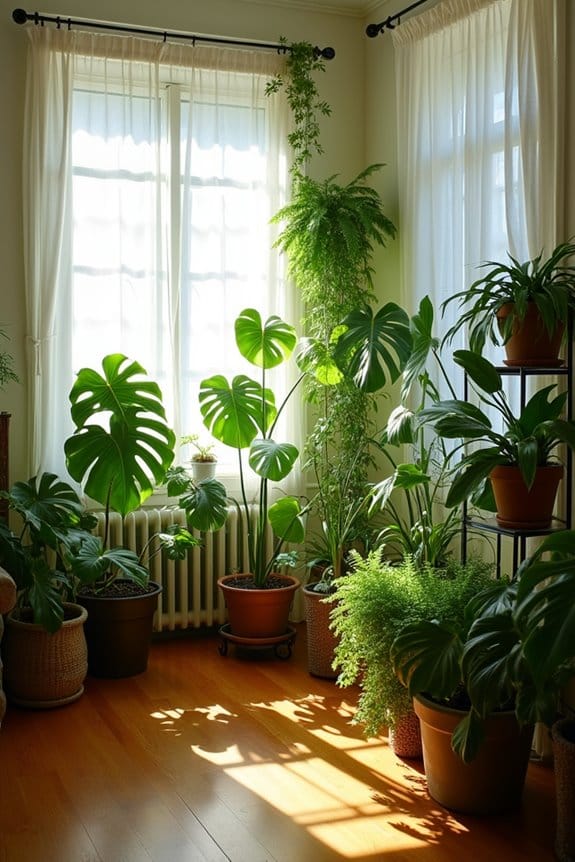
Despite your home's layout, you'll likely encounter some tricky lighting situations that can challenge even experienced indoor gardeners. The key is matching plants to your available light conditions while making smart adjustments when needed.
Start by utilizing north-facing windows for low-light tolerant plants like ZZ plants. For rooms with medium light, position medium-light plants near east-facing windows. In south-facing windows, use sheer curtains to filter intense sunlight, and remember to adjust placement seasonally. When natural light isn't sufficient, supplement with full-spectrum grow lights to give your plants the brightness they need.
For challenging light conditions, consider these strategies:
- Move plants closer to or farther from windows
- Rotate plants regularly for even growth
- Group plants with similar light requirements together
- Use reflective surfaces to maximize bright indirect light
Recommended Products

Program and monitor using mobile app or onboard touchscreen

PREMIUM Foldable 1500W- LED lights specialty manufactured by Sinowell with Samsung LM301 diodes for FULL spectrum light, ideal for ALL STAGES of growth. Large 48x48 footprint for the best light spread and prenetration. Silent functions mean that no fans cause noise pollution in your home. 1500w output incentivizes low cost for the home and runs 50% less energy than “blurple” and other leading LEDs. UL, CE, ETL Certificated.

Seasonal Light Changes and Plant Adjustments
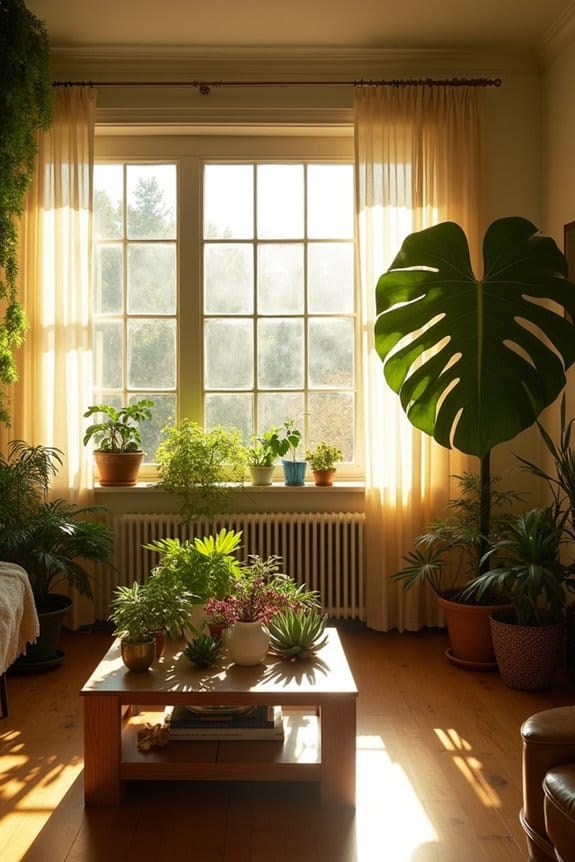
As the seasons shift throughout the year, your indoor plants will need thoughtful adjustments to thrive in changing light conditions. Seasonal changes affect light intensity and duration, making it crucial to monitor your plants' growth and adjust their window placement accordingly. During winter months, when sunlight strength decreases, you'll want to move plants closer to windows to guarantee adequate light.
Here's what you'll need to watch for throughout the year:
- Signs of insufficient light, like stretching stems or leaf loss
- Changes in seasonal light patterns through different windows
- The sun's varying angle and intensity each season
- Your plants' response to current placement
- Areas in your home that receive consistent light year-round
Regular monitoring and plant adjustments will help maintain healthy growth as seasonal changes impact your indoor garden's light conditions.
Recommended Products

PM4 monitor provides wireless heart rate monitoring, machine-to-machine racing, and increased memory capacity with rechargeable battery pack

Kit Included: 60"x60"x80" Grow Tent; Bar LED Grow Light 645W; 8" AeroZesh G8 Fan; GrowHub E42A Controller; 6" AeroWave E6×2; 8" Black Carbon Filter; 8" Prefilter; 8" 25ft Ducting; 8" Clamp×2; 5*5ft Trellis Net; 5Gal Black Grow Bag×10; 8" Vent Cover×2; Pruning Shears; 100m Twist Tie; Sticky Trap×20; Plant Tag×20; Hook & Loop Cable Tie×10; 5 ft Aluminum Ducting Tape; Gardening Gloves; Rope Hanger×2

EFFORTLESS HYDROPONIC HOME GARDEN: Our lettuce grow hydroponic garden tower quietly circulates water and nutrients for you, so you can grow crisp lettuce, herbs, and veggies indoors without soil, guessing, or daily chores—perfect for anyone who wants a thriving garden indoor while spending more time enjoying fresh harvests than maintaining them.
Frequently Asked Questions
Where Is the Best Place to Put Indoor Plants?
Ever dreamed of a thriving indoor jungle? You'll want to match plant types with natural light from windows – north, south, east, or west – while considering humidity levels and room temperature for ideal growth patterns.
Is Sunlight Through a Window Ok for Plants?
Yes, you'll find that window sunlight benefits most plants, though light intensity varies by window orientation. Your plants can photosynthesize through glass, but you'll need to adjust placement based on seasonal changes and specific needs.
What Direction Should Houseplants Be Lighted?
Did you know 90% of houseplants thrive in east or west-facing windows? Choose your plant's direction based on its needs – south-facing for sun-lovers, north-facing for shade plants, and consider artificial lighting during seasonal changes.
What Light Setting Is Best for Indoor Plants?
You'll need to match your plant types with appropriate light settings – some thrive in bright, natural light, others prefer low or indirect light. Consider seasonal changes, temperature effects, and supplement with artificial light when needed.