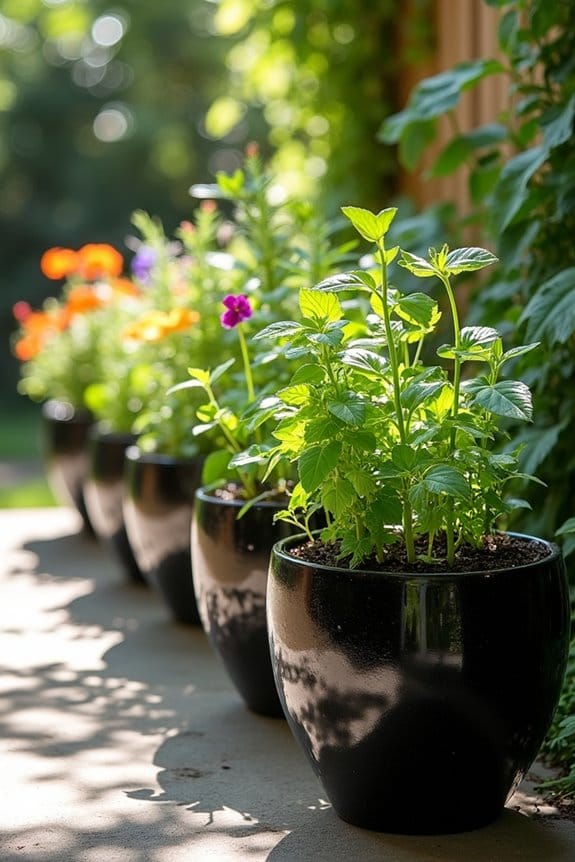
Seven essential drainage solutions will keep your potted plants thriving: use well-draining potting mix with perlite and vermiculite, implement a double-pot system, create sufficient drainage holes, add natural drainage materials like coarse sand, elevate containers off the ground, layer materials strategically, and maintain proper soil structure. Each method helps prevent root rot and waterlogging while promoting healthy growth. Understanding these techniques in detail will transform your container gardening success.
Key Takeaways
- Install a double-pot system with an inner container having drainage holes placed inside a decorative outer pot.
- Mix perlite, vermiculite, and coarse sand into potting soil to create natural pathways for water drainage.
- Drill multiple drainage holes in large containers and ensure they remain clear of debris and blockages.
- Elevate containers using pot feet or stands to improve air circulation and prevent water from pooling underneath.
- Use well-draining potting mix specifically designed for containers instead of dense garden soil.
Choosing the Right Potting Mix for Maximum Drainage
You may be interested

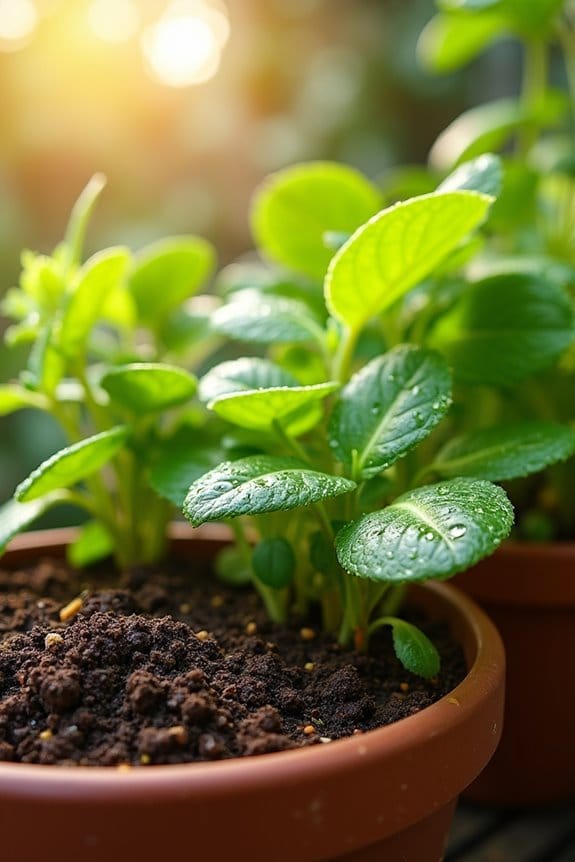
When it comes to successful container gardening, choosing the right potting mix is your foundation for healthy plants. You'll want to select a well-draining mix that contains lightweight materials like coconut coir, vermiculite, and perlite. These components create the perfect balance between moisture retention and drainage.
Don't make the mistake of using regular garden soil in your containers. It's too dense and can become waterlogged, leading to root rot. Instead, look for mixes specifically labeled for container gardening. If you're growing plants that prefer drier conditions, you can add coarse sand to improve drainage. Remember to maintain your mix's quality by incorporating organic matter like compost periodically. This practice guarantees your potting mix continues to provide the ideal environment for strong, healthy roots while preventing soil compaction.
Recommended Products

FEEDS UP TO 6 MONTHS: Miracle-Gro Potting Mix is a gardening soil for outdoor containers that feeds all types of potted plants, including flowers, vegetables, shrubs, annuals, and perennials for up to 6 months
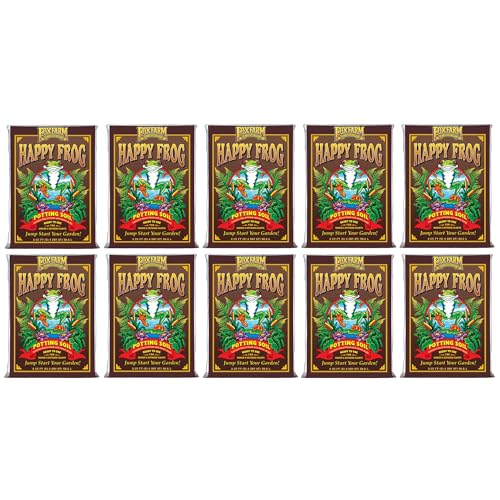
You will receive (10) 2-cubic foot bags of potting soil per purchase.
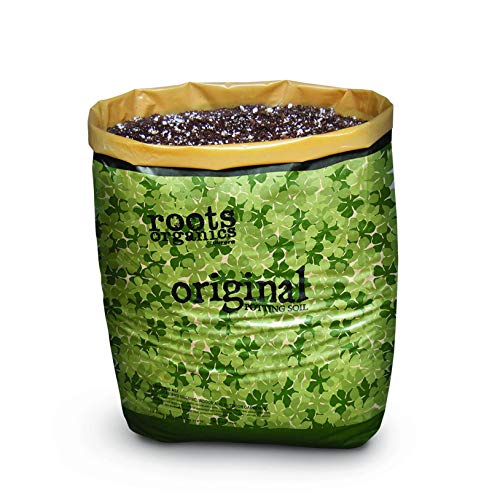
10 GALLON POTTING SOIL: 10 pack of 10 gallon (1.5 cu Ft) of Roots Organics Coco-Fiber Original Potting Soil for your hungry plants
Setting Up a Double-Pot Drainage System

Double-pot drainage systems offer one of the smartest solutions you'll find for container gardening. By placing an inner pot with drainage holes inside a larger outer pot, you'll create an effective water management system that protects your plant roots from excess moisture and root rot.
Setting up your double-pot system is straightforward. First, choose an inner pot that fits comfortably inside your decorative outer container, leaving space for water flow between them. Make sure the inner pot has adequate drainage holes at the bottom. This setup makes it easy to monitor moisture levels and adjust watering as needed. You'll especially appreciate this system during seasonal display changes, as you can lift out the inner pot for replanting without disturbing the established root system. It's a practical solution that combines functionality with flexibility.
Recommended Products

Deck box for storing gardening tools, athletic equipment, outdoor dining decor and more

AMPLE STORAGE SPACE: Safely store small decorative pillows, pool chemicals, pool noodles, gardening tools, grilling accessories, and cleaning supples.

Spacious Compact Shed: Outdoor Storage Shed in a sand-colored exterior, with 34-cubic foot storage offers ample space for organizing and safeguarding long-handled tools and garden accessories
Creating Proper Drainage Holes in Containers

Since proper drainage determines your potted plants' survival, creating well-placed holes in containers isn't just helpful – it's essential. Without adequate drainage holes, you'll risk waterlogging and root rot, which can quickly destroy your plants' health. The right number of holes depends on your container's size and material.
Proper drainage isn't optional for container plants – it's vital for preventing root rot and ensuring your green friends thrive.
- Large containers need at least three drainage holes for ideal drainage and soil air space
- Small pots (6 inches or less) work fine with just one central hole
- Non-porous materials like plastic require multiple, evenly spaced holes for uniform soil drying
- Porous containers like unglazed terracotta can function well with a single drainage hole
Don't forget to regularly inspect drainage holes for blockages. If you notice water pooling or slow drainage, check for clogged holes that might be affecting your plant's health.
Recommended Products

AMPLE GROWING SPACE: This outdoor flowerpot has a 19.5" outer top diameter, 17.5" inner top diameter, 12" outer bottom diameter, 11" inner bottom diameter, 17.5" outer height, and 17" inner height. The planter weighs 6.4 lbs. It can hold 12 gallons/1.6 cubic feet/48 quarts. This large plant pot is great for growing plants and flowers both inside and outside.

DURABLE MATERIAL: Made from a plastic-stone composite, the Lane Bowl planter has a subtle textured finish and is all-weather resistant to cracks, scratches, UV and fading; perfect for hot or cold climates ranging from -20 to +120 degrees

LARGE GROWING AREA: Each succulent planter has an outer top diameter of 20.75" (9.5" bottom) and an outer height of 7". It has an inner top diameter of 17" (12" bottom) and has an inner height of 6". Each planter weighs 3 lbs and has a soil capacity of 3.7 gallons.
Adding Natural Drainage Materials to Your Pots

Beyond well-placed drainage holes, you'll need proper drainage materials to keep your potted plants thriving. Natural drainage materials like perlite and vermiculite are excellent choices that improve aeration and prevent root rot by allowing excess water to drain efficiently.
You can enhance your soil's drainage capabilities by mixing in coarse sand, which creates pathways for water to escape while maintaining ideal moisture levels. For added benefits, incorporate horticultural charcoal to boost nutrient absorption and drainage. If you're working with pots that lack drainage holes, try adding coconut coir – it helps manage water flow while retaining just enough moisture. While landscape rocks at the bottom of your containers can provide space for excess water, remember that this method alone won't prevent waterlogging. Always combine multiple drainage solutions for the best results.
Recommended Products

Coarse Horticultural Perlite: 4 pack large-grade perlite designed for potting soil, seed starting, propagation, hydroponics, organic gardening, and specialty plant mixes

NATURAL, ORGANIC INGREDIENTS: Made of 100% organic ingredients, this organic potting soil is free from synthetic fertilizers and chemicals. This planting soil gives your plants everything they need. Perfect for soil for indoor plants and outdoor potting soil.
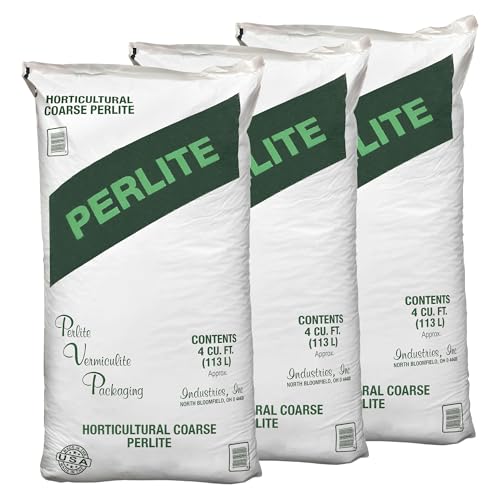
Promotes strong root development by enhancing aeration and drainage—essential for healthy plant growth in pots, gardens, and hydroponic systems
Elevating Containers for Better Water Flow
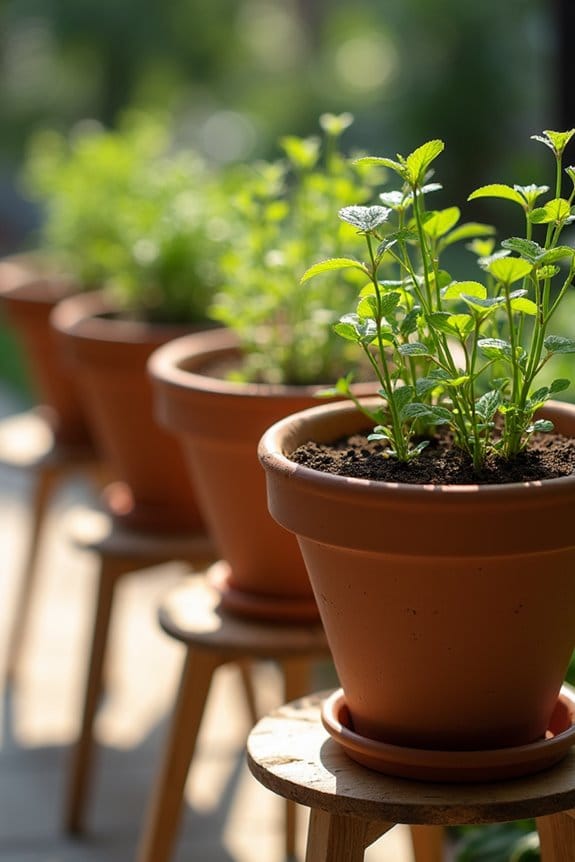
Proper elevation of your potted plants creates an essential foundation for successful container gardening. When you raise containers off the ground, you'll create better air circulation and prevent root rot by allowing excess water to flow freely through drainage holes. Even lifting pots just 1-2 inches makes a significant difference, especially with heavy clay soils that tend to retain moisture.
Here's what you'll achieve by elevating pots:
- Enhanced water drainage through improved airflow beneath containers
- Reduced risk of waterlogging and root diseases
- Better monitoring of soil moisture using decorative saucers
- Uniform moisture distribution across your garden
For best results, guarantee all your containers are raised to the same height. You can use bricks, plant stands, or purpose-made risers to maintain consistent elevation throughout your potted garden.
Recommended Products


2-products-in-1! A garden saucer with a built-in plant riser to elevate your potted plant above overflow waste.
2-products-in-1! A garden saucer with a built-in plant riser to elevate your potted plant above overflow waste.
Implementing Layer-Based Drainage Solutions

While many gardeners focus on pot selection and soil type, creating effective drainage layers forms the foundation of a healthy container garden. You'll want to start by placing a layer of gravel or coarse rocks at the bottom of your pots to help water flow freely through drainage holes.
Next, add a layer of horticultural charcoal above your gravel base. This helps control moisture and prevents unwanted odors. Top it off with a well-draining potting mix enhanced with perlite or vermiculite. These additions create air pockets that help your plant's roots breathe and prevent waterlogging.
Remember to monitor your soil's moisture levels regularly. You'll know your drainage system is working when water flows steadily through the pot without pooling on top or completely rushing out the bottom.
Maintaining Optimal Soil Structure for Drainage
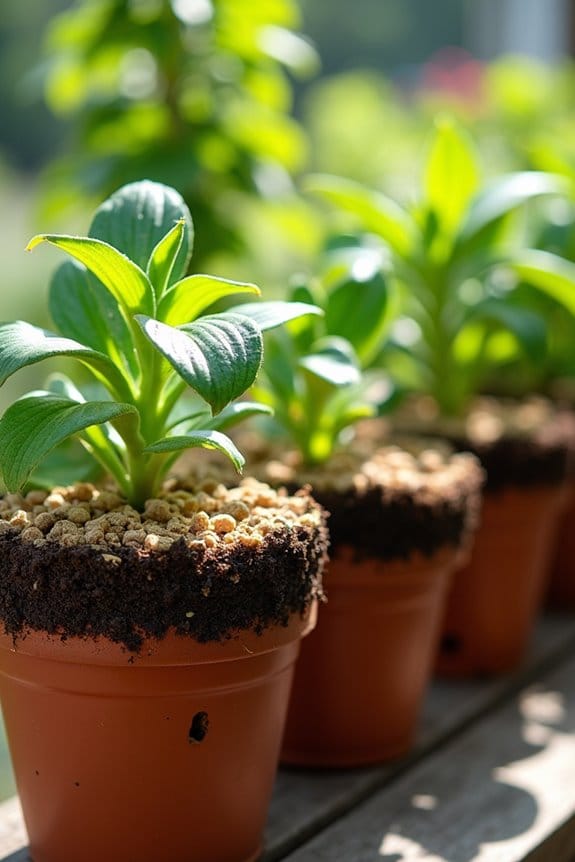
Creating the right soil structure is essential for keeping your potted plants healthy and well-drained. You'll want to focus on a well-draining potting mix that provides adequate air space for roots while allowing water to drain efficiently, especially during heavy rain.
- Mix your potting soil with 30% perlite or coarse sand to improve drainage and prevent water pooling
- Add organic matter like compost regularly to enhance soil structure and promote beneficial microorganisms
- Test your soil drainage by filling a hole with water – it should drop about one inch per hour
- Choose porous container materials like unglazed terracotta to help maintain ideal moisture levels
Remember to check your soil structure periodically and adjust your mix if you notice water isn't draining properly. A good potting mix will feel loose and crumbly, not compacted or waterlogged.
Frequently Asked Questions
What Can I Use for Drainage in Potted Plants?
You'll get the best drainage using potting soil mixed with clay pellets, charcoal pieces, or sand mixture. Skip the gravel layer or rocks, and consider drainage mats, perforated liners, or coconut coir instead.
What Can I Use if My Pots Don't Have Drainage Holes?
You can create drainage alternatives by layering gravel at the pot's bottom and using a well-draining potting mix with perlite. Monitor moisture control carefully to prevent root rot and maintain plant health in containers.
What Do You Put in the Bottom of a Vegetable Planter for Drainage?
You'll want to add perlite, vermiculite, or coconut coir as your drainage materials. Don't use gravel or rocks, as they'll create water retention. Instead, mix charcoal and lightweight materials into your bottom layer.
How to Make Well-Draining Soil for Pots?
Mix quality potting mix with perlite or vermiculite for aeration. Add coarse sand and organic matter like peat moss or coconut coir. You'll want a ratio of 3:1:1 (potting mix:amendments:sand) for ideal drainage.