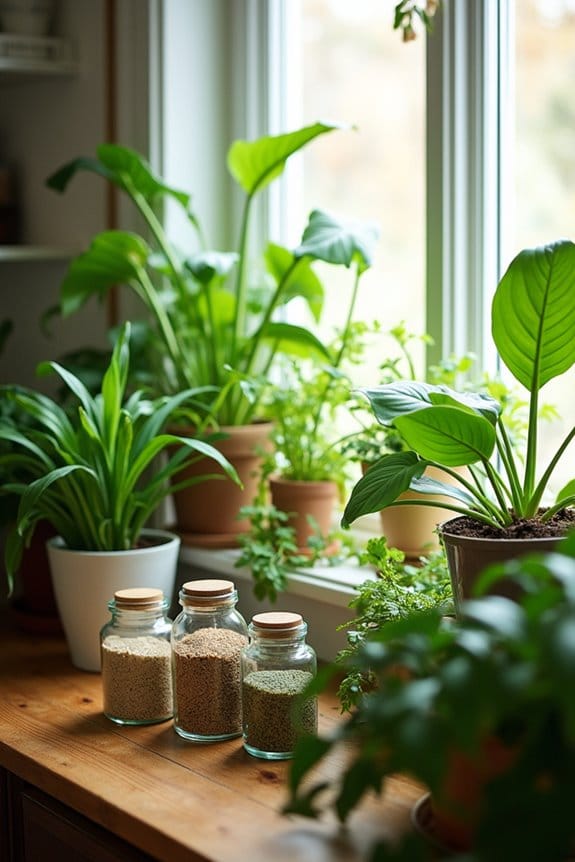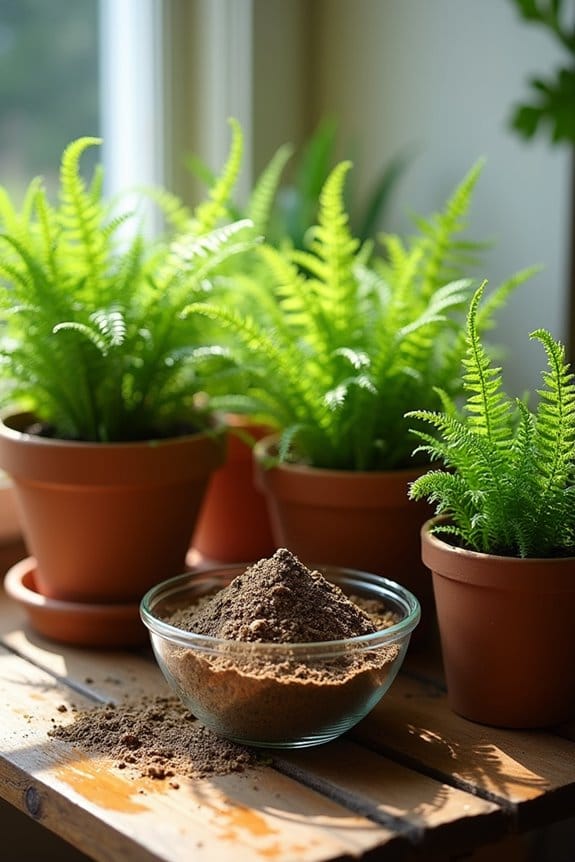

To create the perfect soil mix for indoor ferns, combine high-quality potting soil with peat moss or sphagnum for ideal moisture retention and drainage. Add 1/2 ounce of dolomitic limestone and 1 tablespoon of bone meal per gallon of soil to provide essential nutrients. Place a coffee filter at the bottom of your pot instead of gravel, and guarantee proper drainage holes. For extra moisture control, consider double potting with damp sphagnum moss. These foundational steps will set you up for deeper fern care success.
Key Takeaways
- Combine high-quality potting soil with peat moss or sphagnum to create a well-draining mix that retains adequate moisture.
- Add 1/2 ounce dolomitic limestone and 1 tablespoon bone meal per gallon of soil for essential nutrients.
- Use a coffee filter instead of gravel at the bottom of pots to maintain drainage without soil loss.
- Choose containers with drainage holes and leave one inch of space around roots for healthy growth.
- Consider double potting with sphagnum moss to regulate moisture levels and maintain ideal humidity for indoor ferns.
Understanding Fern Root Systems and Soil Needs

You may be interested

When it comes to growing healthy indoor ferns, understanding their unique root structure is essential for creating the perfect soil environment. Ferns develop shallow root systems that need specific soil conditions to maintain their dark green foliage and prevent root rot.
You'll want to keep soil consistently moist but well-draining, which means getting the right mix of materials. Your ferns will thrive in a potting medium that combines moisture-retaining elements like peat moss with drainage-enhancing components such as sand or gravel. Make sure there's always about an inch of space between the roots and container sides to allow for proper growth.
Remember to check that your pots have drainage holes and aren't sitting in water. This simple step helps your ferns develop strong, healthy roots while preventing waterlogged conditions.
Essential Components of a Fern-Friendly Potting Mix

Now that you understand how fern roots function, let's build the perfect soil mix they need to flourish. Start with high-quality potting soil that offers excellent drainage and organic content. You'll want to boost moisture retention by mixing in peat moss or sphagnum, which helps create the humid environment ferns love.
For essential nutrients, add 1/2 ounce of dolomitic limestone and 1 tablespoon of bone meal or 20% superphosphate per gallon of soil mix. Skip the traditional stones at the bottom of your pot – they're not as effective as you might think. Instead, place a coffee filter at the container's base to maintain drainage while keeping soil in place. For extra moisture control, try double potting by nestling your fern's container within a larger pot filled with damp sphagnum moss.
Recommended Products

FEEDS UP TO 6 MONTHS: Miracle-Gro Potting Mix is a gardening soil for outdoor containers that feeds all types of potted plants, including flowers, vegetables, shrubs, annuals, and perennials for up to 6 months

100% Organic and Peat-Free: Our potting mix is 100% organic and peat-free—made from upcycled plant matter and wood fines from across the
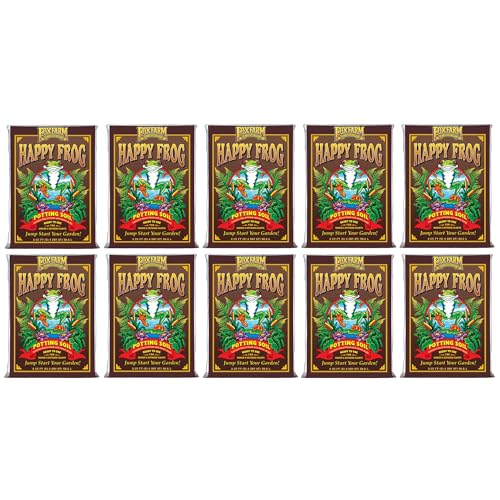
You will receive (10) 2-cubic foot bags of potting soil per purchase.
Balancing Moisture Retention and Drainage
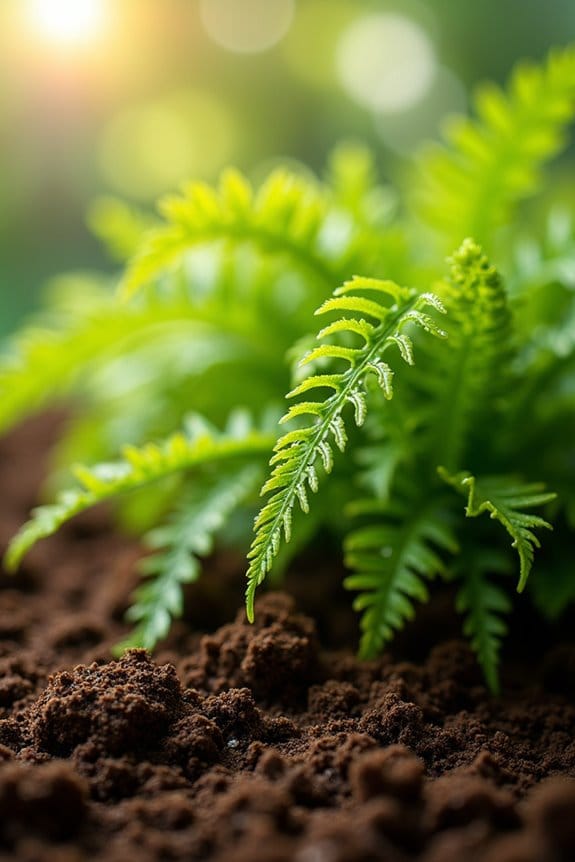
Finding the sweet spot between moisture retention and drainage is essential for your indoor fern's success. Your Boston fern needs consistently moist soil without becoming waterlogged, which can lead to root rot.
To achieve this balance, you'll want to use a potting mix that's rich in organic matter and enhanced with peat moss or sphagnum. Double potting is an excellent technique – place your fern's container inside a larger pot filled with sphagnum moss to maintain ideal moisture levels. Don't forget to guarantee proper drainage by using containers with holes and placing a coffee filter at the bottom instead of stones. This method prevents soil from washing out while allowing excess water to escape. The key is creating an environment that mimics your fern's natural habitat, where roots stay moist but never soggy.
Recommended Products


You will receive 10 (1.5 cu ft) bags per order

You will receive (10) 1.5-cubic foot bags of potting soil per purchase.
Nutrient Amendments for Optimal Fern Growth
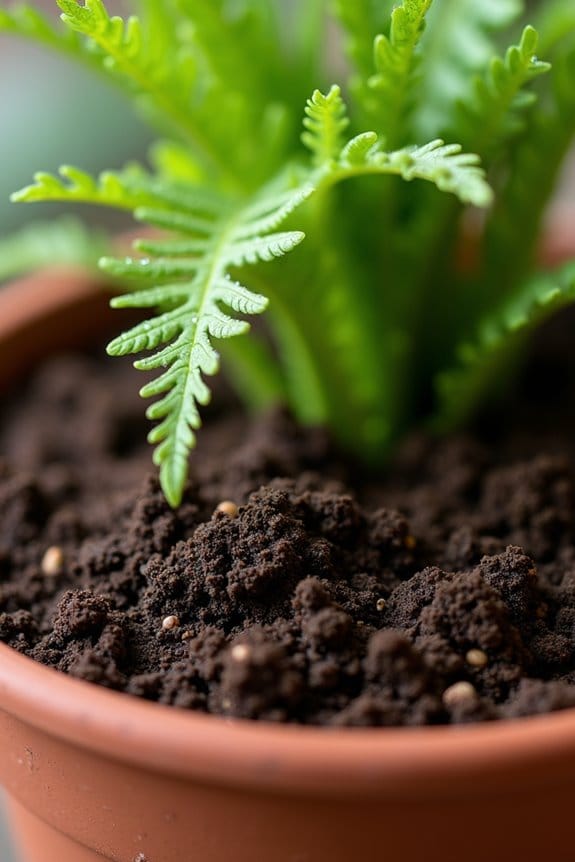
Beyond maintaining proper moisture levels, your indoor fern's success depends heavily on the right nutrient balance in its soil mix. For best results, add 1/2 ounce of dolomitic limestone per gallon of soil to provide essential calcium and magnesium. While your fern thrives in bright light filtered through a sheer curtain, it also needs proper nutrients to flourish.
Mix in 1 tablespoon of bone meal per gallon of soil to support healthy root development. Your fern's potting mix should combine organic materials like peat moss with sand for drainage. Keep the pH between 5.5 and 6.5 for ideal nutrient absorption. Since ferns need fewer nutrients than typical houseplants, use organic fertilizers specifically formulated for their needs. Regular soil testing will help you maintain the perfect growing environment.
Recommended Products
Helps adjust soil pH to improve plant absorption of nutrients


FAST-ACTING SOIL pH CORRECTION LimeLight Pro uses enhanced pelletized dolomitic limestone to quickly raise low soil pH so your lawn can better absorb essential nutrients. Ideal for acidic soils that cause poor color, weak growth, and low fertilizer response.
Container Selection and Drainage Solutions

Three critical factors determine successful container selection for your indoor fern: size, material, and drainage capacity. When choosing pot size, leave one inch of space between the root ball and container walls to support healthy growth. While various container materials work well, make sure your choice has proper drainage holes at the bottom.
For effective drainage techniques, skip the traditional method of adding stones at the base. Instead, place a coffee filter over the drainage holes to keep soil in while allowing water to flow freely. You'll get even better results by double potting – set a permeable container inside a larger pot filled with sphagnum moss. This setup helps maintain consistent moisture levels for your fern's delicate root system while preventing waterlogged soil that can lead to root rot.
Recommended Products

Sculptural Sphere Silhouette – The Cosapots Mondo is a round sphere planter with a smooth, modern silhouette that turns any plant into a centerpiece. This statement bowl planter works as a large round indoor plant pot or outdoor planter, elevating ordinary plant pots and flower pots into refined decor.

HANDCRAFTED EXCELLENCE – Each Cosapots Semplito Grand rectangular planter is meticulously handmade with high-quality fiberglass and resin by skilled artisans under the guidance of Belgian architects.

FEEDS UP TO 6 MONTHS: Miracle-Gro Moisture Control Potting Soil Mix feeds plants for up to 6 months and Grows Plants Twice As Big (vs unfed plants)
Measuring and Mixing Your Custom Fern Soil
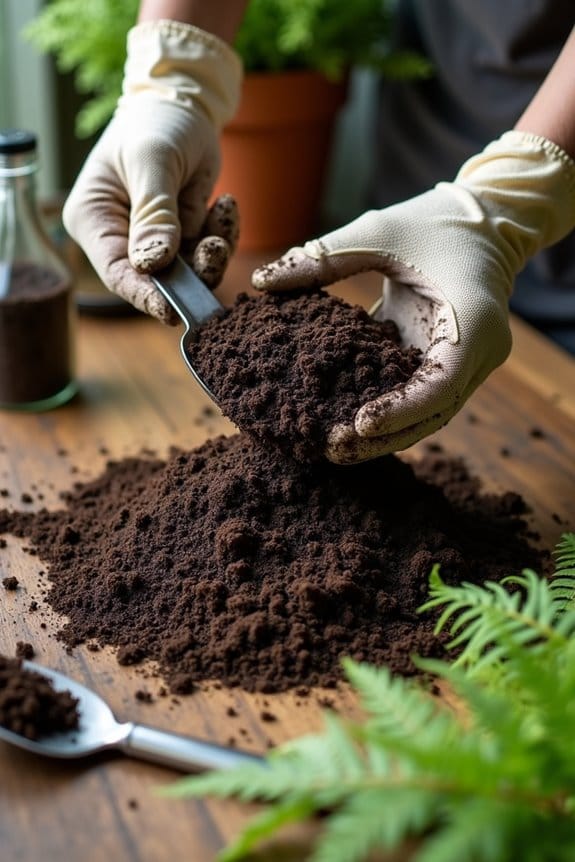
The perfect soil mix for your indoor ferns starts with precise measurements and careful blending. For each gallon of base potting soil, you'll need to balance moisture levels and soil pH by adding specific ingredients:
Creating the ideal fern soil requires precise measurements and expert blending to achieve perfect moisture and pH balance for thriving plants.
- Mix in equal parts peat moss or sphagnum to retain moisture
- Add sand or fine gravel for proper drainage
- Incorporate 1/2 ounce of dolomitic limestone per gallon
- Include 1 tablespoon of bone meal or 20% superphosphate
Your goal is to create a rich, well-draining medium that supports ideal root health. Don't forget to place a coffee filter at the bottom of your pot instead of stones – this prevents soil loss while maintaining good drainage. When mixing, verify all components are thoroughly combined to create a consistent texture throughout. Your ferns will thrive in this custom-blended soil that provides both nutrients and proper moisture control.
Signs Your Fern Soil Mix Needs Adjustment
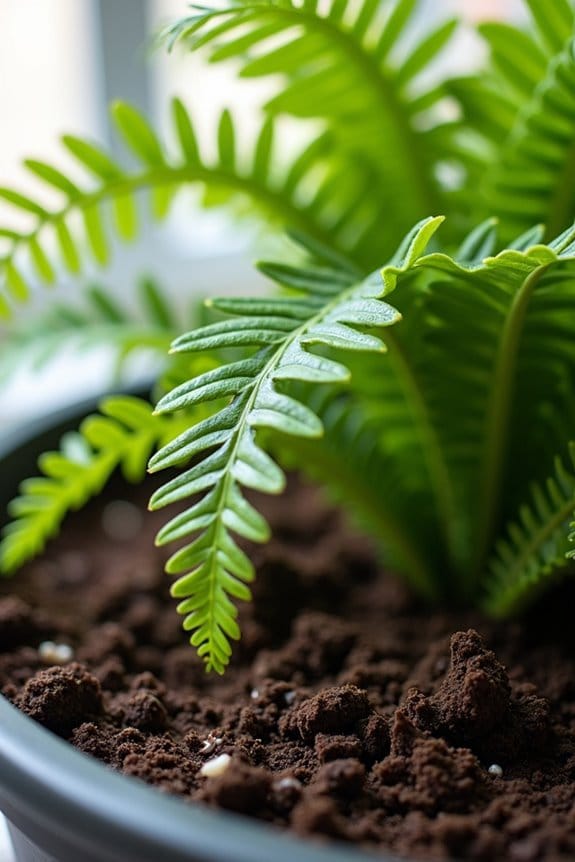
Monitoring your fern's health provides clear signals when the soil mix isn't meeting its needs. Your soil moisture management needs attention if you notice yellowing leaves or frequent leaf drop. Watch for slow-draining or compacted soil that can suffocate roots and limit healthy root development.
Keep an eye out for these additional warning signs that indicate it's time to adjust your mix:
- White crust forming on the soil surface (over-fertilization)
- Soil that's consistently too wet or dry
- Signs of pests or mold in the growing medium
For ideal root health and pest management, you'll want to modify your soil mix when these issues appear. If the soil feels heavy or drains poorly, blend in materials that improve aeration. This helps create the perfect growing environment your fern needs to thrive.
Seasonal Soil Considerations for Indoor Ferns
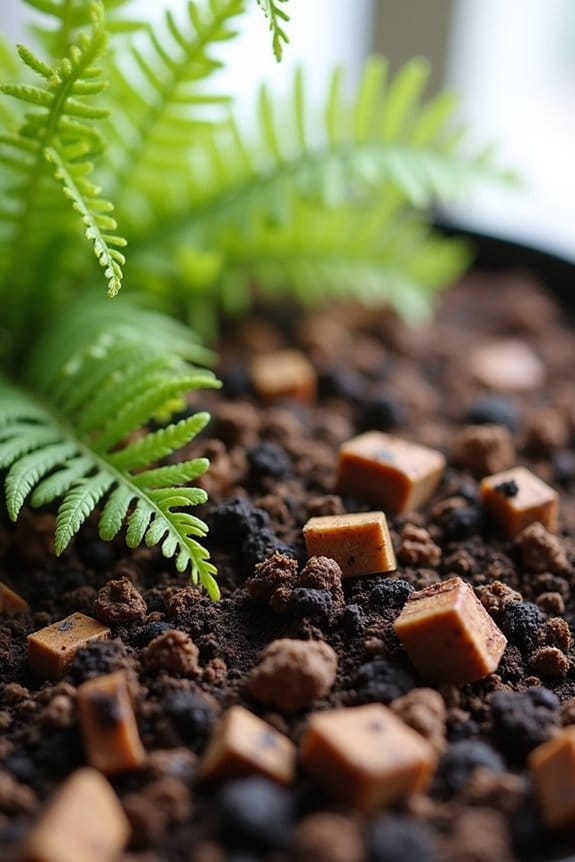
Since your indoor ferns' needs change throughout the year, you'll want to adjust their soil mix accordingly for ideal growth. During spring and summer, incorporate 1/2 ounce of dolomitic limestone and 1 tablespoon of bone meal per gallon of soil to support active growth. Your seasonal watering strategies should adapt as temperatures fluctuate.
Adjust indoor fern soil seasonally, adding limestone and bone meal in warmer months to support vigorous growth and optimize watering needs.
For successful year-round fern care, focus on these key adjustments:
- Add peat moss in winter for humidity adjustment techniques when indoor air gets dry
- Reduce fertilizer amounts during fall and winter dormancy periods
- Monitor temperature impact awareness by checking soil moisture more frequently when temps drop below 60°F
Remember to repot in spring using containers with proper drainage holes that match your fern's size. This timing aligns with the plant's natural growth cycle and helps prevent root issues.
Repotting Tips and Soil Replacement Guide

Properly repotting your indoor ferns guarantees they'll thrive for years to come, but timing and technique matter greatly. Watch for signs of overcrowding to determine repotting frequency, and only transplant when necessary.
When selecting new containers, make sure they're just one inch wider than your fern's root system on all sides. You'll want to fill the pot with a well-draining mix that includes dolomitic limestone and bone meal or superphosphate for best root growth. Skip the traditional gravel layer at the bottom – instead, use a coffee filter to maintain proper drainage while keeping soil in place.
For extra moisture control, try double potting. Place your fern's container inside a larger pot with sphagnum moss. This setup helps maintain humidity levels without risking root rot from excess water contact.
Recommended Products

Crafted for Monstera Lovers: Specifically formulated for Monstera varieties, including the iconic Swiss Cheese Plant (Monstera deliciosa), Thai Constellation and Ceriman.
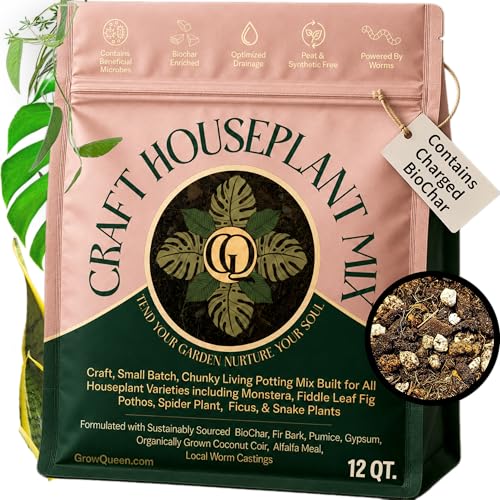
COMPLETE INDOOR POTTING SOIL FOR HEALTHY ROOT DEVELOPMENT: A premium potting soil for indoor plants designed to replace generic potting mix or garden dirt. Balances moisture and airflow so roots can breathe and expand. Works as houseplant soil, monstera soil, pothos soil, peace lily potting soil, and tropical plant soil for thriving indoor potted plants of all kinds.

NUTRIENT RICH & PLANT FOOD COMPATIBLE: Our tropical plant soil is full of living beneficial microbes. Enriched with essential nutrients, organic matter, and worm castings, this tropical potting soil works perfectly with Grow Queen Organic All-Purpose Plant Food for robust and healthy growth.
Common Soil Mix Mistakes to Avoid
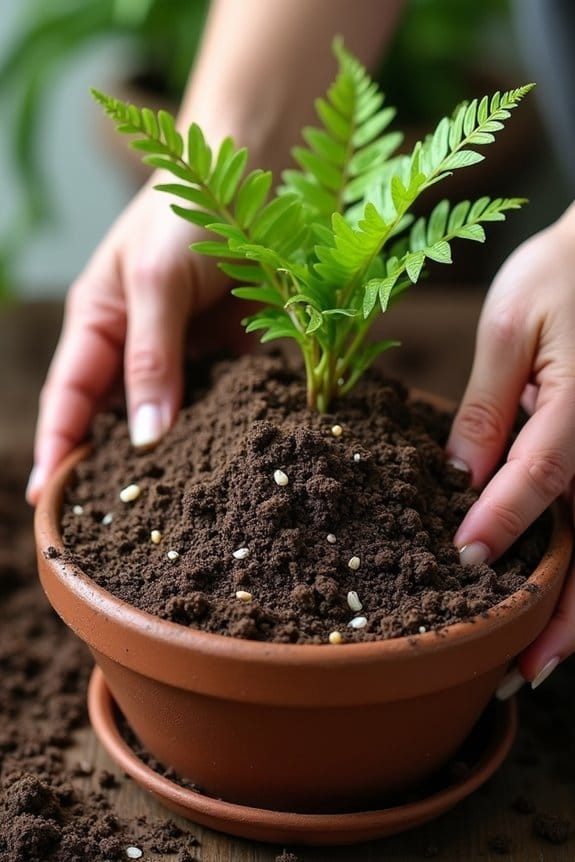
Although growing indoor ferns can be rewarding, several common soil mix mistakes can quickly derail your success. To prevent soil compaction issues, don't use garden soil in your containers, as it will become too dense for proper root growth. Understanding organic matter importance, you'll want to incorporate materials like peat moss or sphagnum to maintain ideal moisture levels.
When it comes to drainage solutions, avoid these frequent mistakes:
- Placing stones at the bottom of pots (use coffee filters instead)
- Using containers without drainage holes
- Creating overly dense soil mixtures without proper aeration
Instead, opt for a well-balanced mix of potting soil, sand, and gravel to guarantee proper drainage and aeration. Your ferns will thrive when you avoid these common pitfalls and provide them with the right growing medium.
Frequently Asked Questions
What Is the Best Potting Mix for Ferns Indoors?
Like crafting a cozy bed, your indoor fern's perfect mix should blend potting soil with peat moss, adding sand for drainage. Don't forget dolomitic limestone and bone meal for extra nourishment they'll love.
What Soil Should I Use for Fern?
You'll need a well-draining potting mix that meets your fern's potting requirements. Use soil rich in organic matter with peat moss for moisture retention. Add dolomitic limestone and bone meal for essential drainage and nutrients.
How Do You Keep Ferns Alive Indoors?
Like clockwork, maintain consistent fern care techniques: place in indirect light, keep indoor humidity levels at 30-50%, water when soil's dry, and focus on fern disease prevention through regular monitoring and proper air circulation.
What Does Epsom Salt Do for Ferns?
Epsom salt benefits your ferns by providing essential magnesium for chlorophyll production and nutrient absorption. It's a key part of fern nutrition, helping prevent yellowing fronds and supporting healthy growth in your plants.