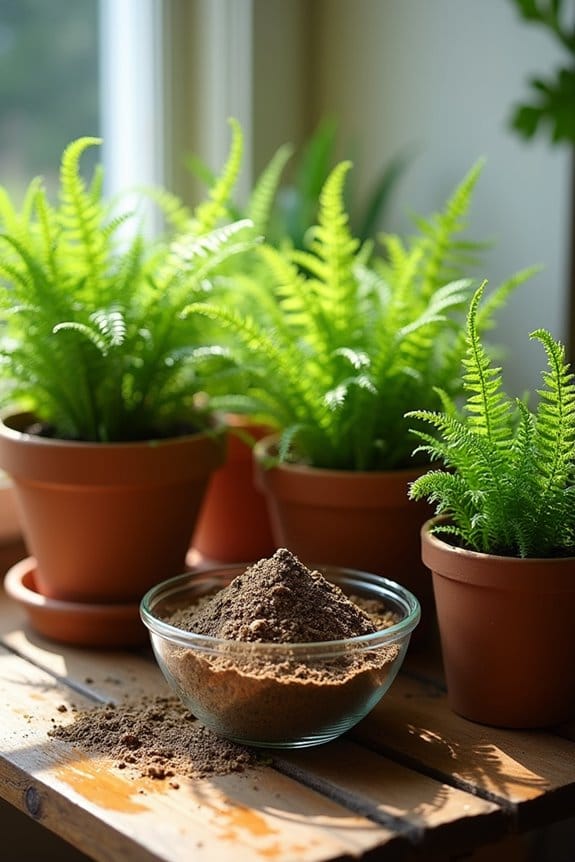
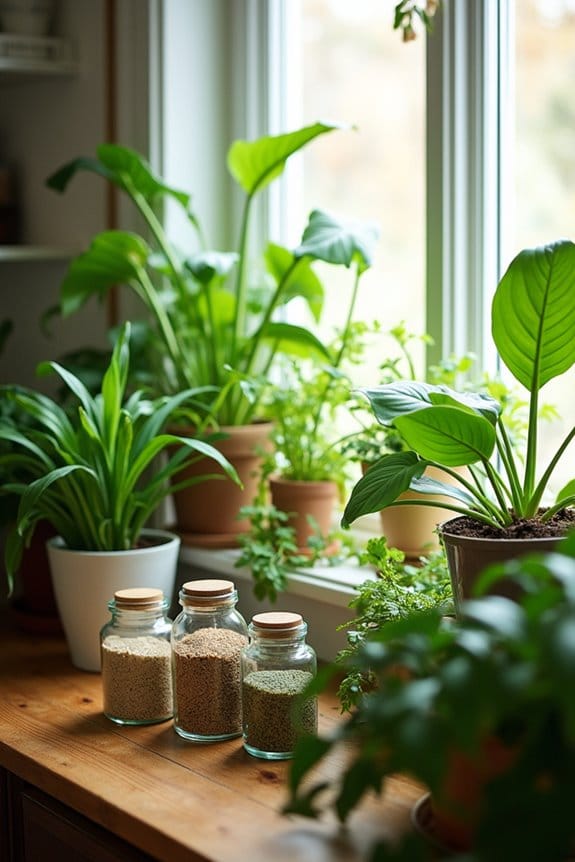
Most indoor plants thrive in three main light categories: Minimum for Maintenance (MM), Good Growth (GG), and Commercial Growth (CG). You'll need to measure light levels using tools like LTH meters or the Photone app to guarantee proper placement. South-facing windows work best for high-light plants, while north-facing spots suit low-light varieties. Different species have specific needs – African Violets need 200 FC, while Snake Plants can manage with 50 FC. Understanding these fundamentals will open your path to healthier, more vibrant houseplants.
Key Takeaways
- Light levels for indoor plants fall into three categories: Minimum for Maintenance, Good Growth, and Commercial Growth.
- South-facing windows provide optimal light for high-light plants, while north-facing windows suit low-light varieties like ZZ Plants.
- Most indoor plants thrive in bright indirect light, with specific requirements ranging from 50 FC to 400 FC.
- Regular light monitoring with meters or apps helps ensure plants receive adequate light throughout different seasons.
- Winter months often require supplemental grow lights for 6-12 hours daily to maintain healthy plant growth.
Understanding Light Level Categories for Indoor Plants

You may be interested


When you're starting your journey with indoor plants, understanding light level categories is vital for helping your green companions thrive. The three main light levels you'll encounter are Minimum for Maintenance (MM), Good Growth (GG), and Commercial Growth (CG). Each of these categories plays an important role in proper plant care and development.
You'll find that Good Growth conditions are perfect for most home gardeners, providing ideal light requirements without the need for specialized equipment. For many plants, bright indirect light hits this sweet spot perfectly. If you're dealing with a plant that has a high MM value, you might need to supplement natural light sources with artificial lighting. Understanding these categories helps you match your plants to available light conditions, ensuring successful plant growth in your indoor space.
Measuring Natural and Artificial Light Sources
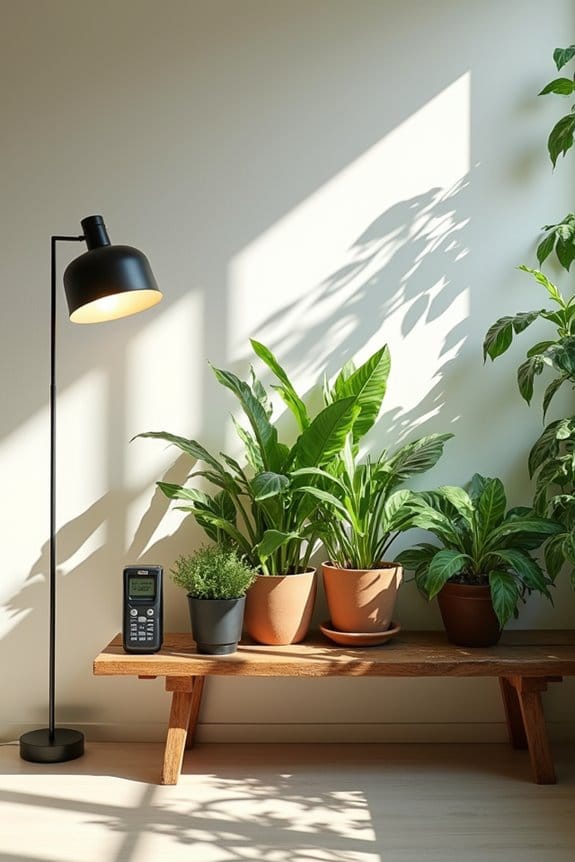
Two essential tools can help you accurately measure light levels for your indoor plants: physical light meters and smartphone apps. Light meters like the LTH Meter can measure both natural sunlight and artificial light sources, with readings ranging from 3000-8000 FC in direct sun.
For a budget-friendly option, you'll find the Photone app particularly useful. It measures light for plants in PPFD and DLI units, which are especially helpful when using LED grow lights. To get the most accurate readings of your plants' light needs, take measurements at different times throughout the day. Morning, noon, and afternoon readings will help you understand how light levels change. Remember that indirect light decreases considerably as you move away from windows, so regular monitoring guarantees your plants receive adequate light.
Recommended Products

The electric underfloor heated TapeMat rolls out easily to be installed beneath tile, stone, wood, or laminate flooring in homes and commercial buildings, mesh can be cut with scissors and flipped, and the blue wire can be pulled out and run around obstructions and awkward spaces
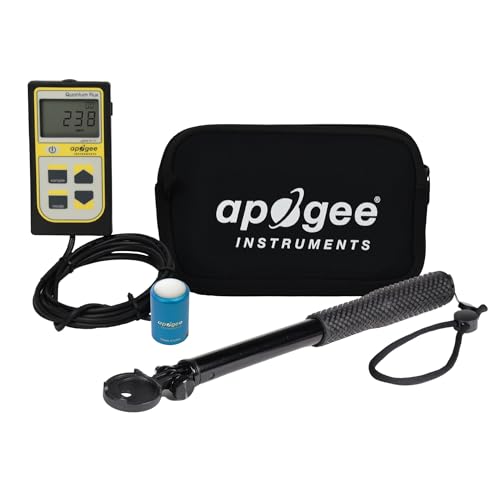
DR BRUCE BUGBEE: Apogee PAR meters have been designed and refined by Dr. Bruce Bugbee, a world-famous crop physiologist

The Autopilot PX2 Advanced Lighting Controller provides precision photoperiod control of up to 512 fixtures in two independently controlled zones, all from one centralized location.
Window Placement Strategies for Optimal Growth

Finding the perfect spot for your indoor plants starts with understanding how different window orientations affect light exposure. Each window direction offers unique light conditions that can help your plants grow and thrive.
Your north-facing windows are ideal for low light plants like ZZ Plants that don't need much direct sunlight. For high-light loving plants such as succulents, you'll want to use south-facing windows where they'll receive plenty of bright light throughout the day. East-facing windows provide gentle morning sun that's perfect for medium-light plants like Peace Lilies, while west-facing spots work well for sun-loving varieties if you're careful about afternoon heat.
Remember to observe your window placement throughout the day to verify your indoor plants are getting the right amount of light for maximum growth.
Recommended Products

Kit Included: 60"x60"x80" Grow Tent; Bar LED Grow Light 645W; 8" AeroZesh G8 Fan; GrowHub E42A Controller; 6" AeroWave E6×2; 8" Black Carbon Filter; 8" Prefilter; 8" 25ft Ducting; 8" Clamp×2; 5*5ft Trellis Net; 5Gal Black Grow Bag×10; 8" Vent Cover×2; Pruning Shears; 100m Twist Tie; Sticky Trap×20; Plant Tag×20; Hook & Loop Cable Tie×10; 5 ft Aluminum Ducting Tape; Gardening Gloves; Rope Hanger×2

MULTI-USE POT: Our timeless and modern bowl planters are ideal for your indoor space or your outdoor deck, patio, or balcony. They effortlessly complement any design style and house your favorite flowers, succulents and other plants. The 40-inch bowl includes a plug system for easy use in water gardens or fountains.
72-INCH FLOOR FOUNTAIN STATEMENT PIECE: Creates a dramatic vertical water feature for entryways, patios, gardens, offices, lobbies, reception areas, and commercial spaces while adding relaxing water movement and visual appeal.
Plant Species-Specific Light Requirements
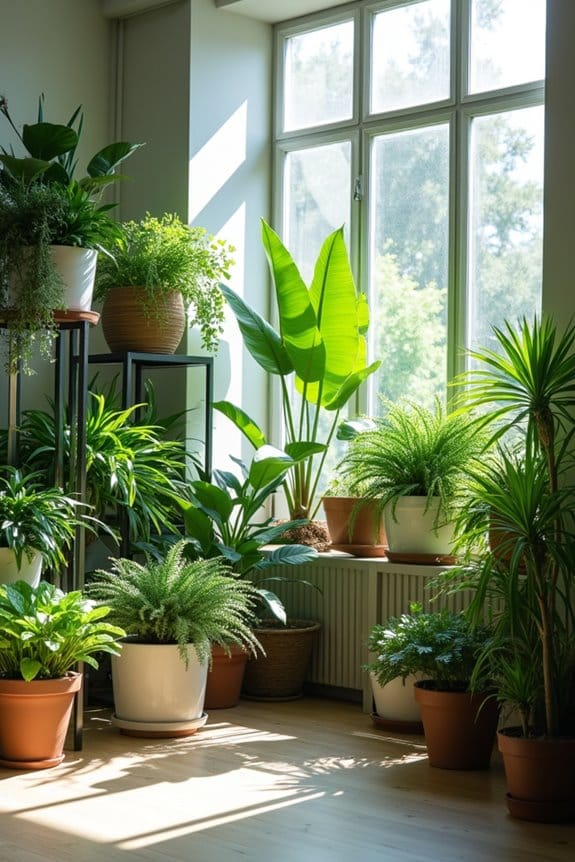
Different indoor plants have widely varying light requirements that you'll need to understand for successful growth. When selecting an area that receives the right amount of light, consider each plant's specific needs for best results. This light guide will help you determine how much light your favorite species need when grown indoors.
- African Violets require at least 200 FC of light and can handle 2-3 hours of direct sunlight for healthy blooming
- Snake Plants are highly adaptable, thriving in low light around 50 FC but preferring brighter indirect conditions
- Pothos plants need minimum 100 FC for good growth and tolerate 3-4 hours of direct sun exposure
- Ficus trees demand at least 400 FC of indirect light to maintain their foliage
- Alocasia plants thrive with 200 FC minimum and can adapt to 3-4 hours of direct sunlight
Recommended Products

【Grow Tent Complete System Includes】FC-E4800 LED grow light, 48"x48"x80" grow tent, 6inch 402 CFM inline fan,Smart Controller 43(No power adapter, powered directly by the Inline fan),carbon filter,25ft Ducting,6inch clip fan, grow room glasses,elastic trellis netting, 2pcs vent covers,3pcs stainless clamps,6pcs grow bags, pruning shear,2pcs corner shelf,2pcs rope hangers.


Seasonal Light Adjustments and Supplementation
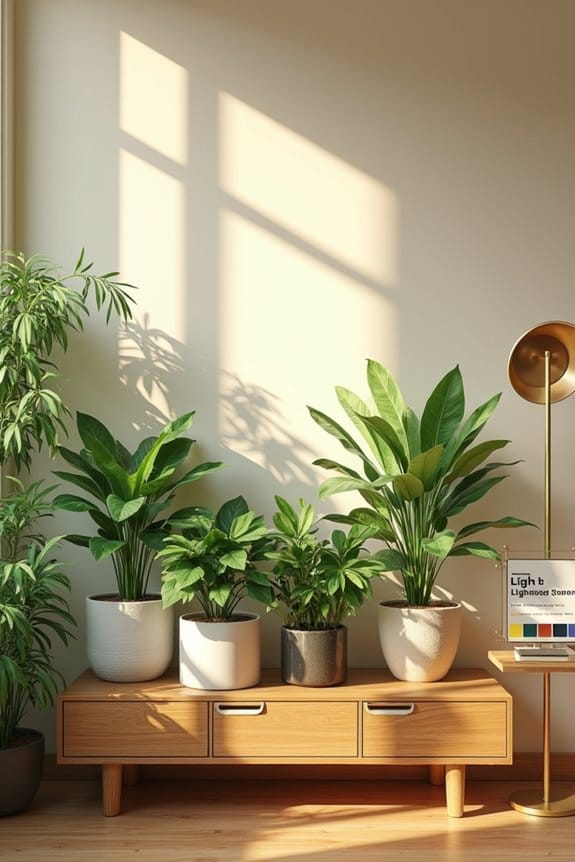
Since natural light levels fluctuate dramatically with the changing seasons, you'll need to adjust how you care for your indoor plants throughout the year. Seasonal changes affect both the intensity and duration of sunlight, especially during winter months when light exposure is limited.
Monitor your plant growth by regularly checking light levels near your windows. While south-facing windows typically provide reliable light year-round, other locations may need supplementation. You can use a PAR meter to measure exact light requirements for different areas of your home. When natural light isn't enough, add a plant grow light for 6-12 extra hours daily. This is particularly important for high-light plants during shorter winter days. Remember to reassess your plants' positions as the sun's angle shifts, ensuring they receive ideal light exposure throughout every season.
Recommended Products

Features Samsung LM301H EVO LEDs each rated at 3.14 µmol/J PPE, the highest efficiency of LM301B, LM301H, and Bridgelux 3030 chips.

IP65 Water Resistant Rating: Features IP65 water resistant rating to protect the LED system from moisture and dust in grow environments

🌞 TRUE SUNLIKE SPECTRUM – The first LED grow light engineered to replicate a real CMH-style sunlight spectrum. Balanced White, Green, Dual Red (640nm + 660nm), Far Red, and optional UV deliver unmatched canopy penetration and plant performance.
Frequently Asked Questions
What Is the Light Schedule for Indoor Plants?
While you might think it's complicated, most plants need 14-16 hours of natural light or artificial lighting daily. You'll want to adjust light duration and intensity based on seasonal changes to guarantee ideal plant growth.
What Is Considered Full Sun for Indoor Plants?
You'll need at least 6 hours of direct sunlight with high light intensity, typically through south-facing windows. Consider seasonal changes, heat exposure, and supplement with artificial lighting if your plant placement doesn't provide enough sunlight.
What Light Setting Is Best for Indoor Plants?
Don't put all your eggs in one basket! You'll need to match each plant's light requirements through strategic plant placement. Consider light intensity, combining natural sunlight and artificial lighting for proper light duration and photoperiod effects.
How Much PPF Do Plants Need?
Your plants' PPF requirements vary by species, ranging from 50-800 µmol/s depending on light intensity needs. You'll find most plants thrive between 200-300 µmol/s for ideal photosynthesis rates with proper lighting duration.