To save your plants from root rot, start by checking for wilting leaves, yellowing foliage, and foul soil odors. Inspect roots immediately – healthy ones should be firm and light-colored, while infected roots need trimming with sterilized tools. Use well-draining soil mix, adjust watering schedules, and guarantee proper container drainage. Apply natural fungicides, maintain good ventilation, and monitor soil moisture weekly. Regular plant inspections and environmental adjustments will reveal the full scope of effective prevention methods.
Key Takeaways
- Remove infected roots immediately using sterilized tools and trim back to healthy, white sections to prevent further spread.
- Repot the plant in fresh, well-draining soil mix and ensure the container has adequate drainage holes.
- Reduce watering frequency and only water when the top inch of soil feels completely dry.
- Trim back foliage by one-third to reduce stress on the recovering root system.
- Monitor roots monthly and maintain proper ventilation to prevent future root rot issues.
Identifying Early Warning Signs of Root Rot

You may be interested

How can you catch root rot before it destroys your beloved plants? The early signs of this common garden problem aren't always obvious, but knowing what to look for can help save your plants.
Keep an eye out for wilting leaves, even when you're watering regularly – this is often the first red flag. If you notice stunted growth or yellowing foliage, it's time to investigate further. Check near the base of your plant for water-soaked areas on the stems, which can indicate rotting roots below the soil.
Your nose can also help detect signs of root rot. If you notice a foul smell coming from the soil, gently remove the plant and examine its roots. Healthy roots should be firm and light-colored, while infected ones will be dark, mushy, and soft to the touch.
Emergency Root Inspection and Assessment

Once you've spotted potential warning signs, it's time for a closer look at your plant's root system. To perform an emergency root inspection, carefully remove your plant from its pot over a sink or outdoors. You'll want to thoroughly assess the extent of any damage while checking for signs of root rot.
- White or light tan roots mean your plant is still fighting strong
- Dark, mushy roots are crying out for immediate help
- A foul smell from the soil warns of serious decay
- Roots that slip out of their outer layer need urgent attention
- Healthy roots should feel firm, not slimy, when touched
Gently examine the entire root system, noting which sections remain healthy versus those showing decay. This careful assessment will help determine your next steps for treatment and recovery.
Proper Trimming Techniques for Infected Roots

Saving infected roots requires precise trimming techniques with clean, sharp tools. You'll need sterilized scissors or pruning shears to trim away any dark, mushy, or rotted sections. Make clean cuts to prevent further damage while keeping as many healthy roots intact as possible.
When you trim the roots, cut back to where they're white and firm. This guarantees you're working with viable tissue that can support new growth. Don't forget to prune the plant's foliage by one-third to half – this reduces stress on the recovering root system. Before repotting, let the trimmed roots dry for several hours. This drying period helps the cuts heal and reduces transplant shock. Remember to focus on preserving healthy roots while removing all signs of decay to give your plant the best chance of recovery.
Selecting the Right Soil Mix for Recovery
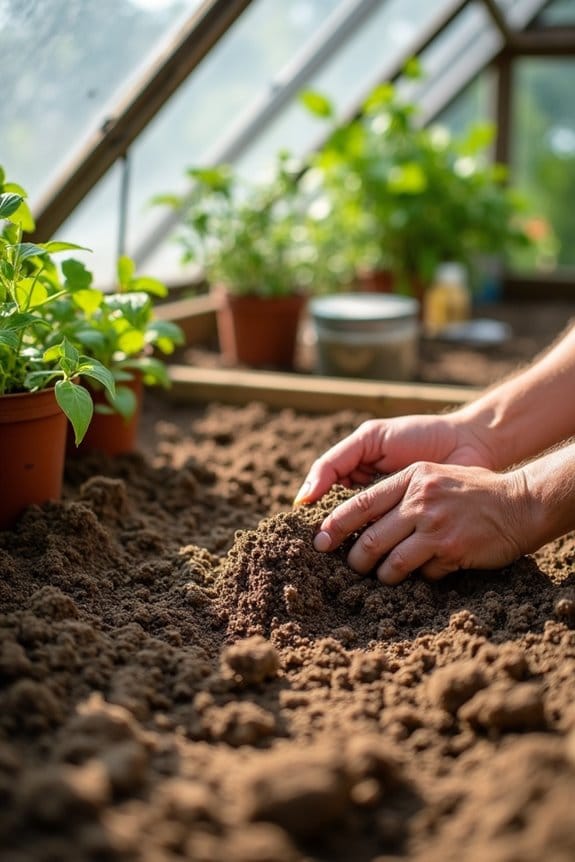
When treating root rot, choosing the right soil mix is absolutely critical for your plant's recovery. You'll want to select a well-draining soil mix that prevents water retention while supporting healthy root recovery. Adding organic matter like peat or coconut coir helps create the perfect balance of moisture and aeration.
Key elements of an effective recovery soil mix:
- Light, airy texture that allows roots to breathe and grow freely
- Coarse materials like perlite or sand for enhanced drainage
- pH levels between 6.0-7.0 to optimize nutrient absorption
- No heavy, compacted soils that trap moisture
- Specialized components for particular plant needs (like orchid or cactus mix)
Remember to avoid dense soil mixtures that could slow your plant's healing process. Instead, focus on creating an environment that promotes strong, healthy root development.
Recommended Products

FEEDS UP TO 6 MONTHS: Miracle-Gro Potting Mix is a gardening soil for outdoor containers that feeds all types of potted plants, including flowers, vegetables, shrubs, annuals, and perennials for up to 6 months

You will receive (10) 2-cubic foot bags of potting soil per purchase.

You will receive (10) 1.5-cubic foot bags of potting soil per purchase.
Essential Container Drainage Solutions

Beyond selecting the right soil mix, proper container drainage forms the foundation of preventing and treating root rot. Your first step should be ensuring all pots have adequate drainage holes to let excess water escape. Terracotta pots are an excellent choice since they're naturally porous and help regulate soil moisture levels.
You'll want to add a layer of gravel at the bottom of your containers to improve drainage, but don't rely on this method alone. Keep an eye on your soil's moisture level by letting the top inch dry between waterings. When choosing containers, avoid oversized pots that retain too much water. Instead, pick appropriately sized ones that allow for proper soil drying cycles. This balanced approach to container drainage will help protect your plants from developing root rot issues.
Recommended Products

Handmade Imperial Court Design: Finished in a traditional design depicting graceful figures amidst a serene palace garden in soothing blue and white. A timeless, versatile, way to add classic beauty to your space.

Satsuma Design: Meticulously hand-painted with intricate scenes showcasing vibrant landscapes, colorful flowers, and majestic peacocks. The rich color palette and delicate gold accents celebrate the artistry and heritage of the Far East.
Smart Watering Practices After Treatment

After treating your plant for root rot, proper watering techniques become vital for its recovery. You'll need to monitor soil moisture carefully and establish a balanced watering routine that prevents future issues. To avoid root rot recurrence, always check that the top inch of soil is completely dry before watering again.
- Your plant's survival depends on your attentive care during recovery
- Every drop of water matters in these significant healing weeks
- Your vigilance now will guarantee stronger roots tomorrow
- Success comes from patience and careful observation
- Your plant will show signs of gratitude with new growth
Remember to adjust your watering schedule as seasons change. Your plant will need less water during cooler months. Always use containers with proper drainage, and don't forget to empty any water that collects in the saucer beneath the pot.
Natural Fungicide Applications and Treatment
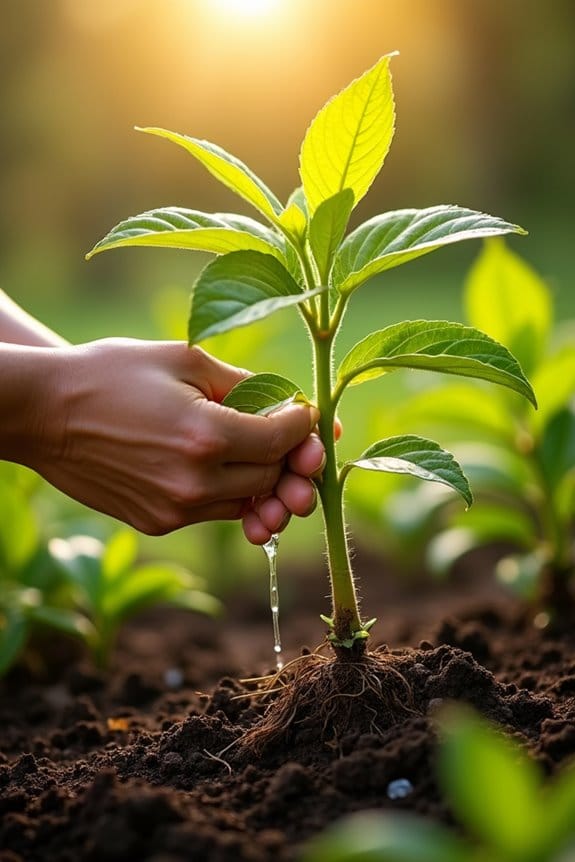
Natural fungicides offer a safe and effective way to combat root rot while keeping your plants chemical-free. You'll find several kitchen ingredients that can help save the plant from fungal infections. Start by applying neem oil directly to the affected roots, which will disrupt harmful fungi while promoting healthier growth.
To treat root rot effectively, mix one tablespoon of baking soda per gallon of water and apply it to the soil. You can also sprinkle cinnamon powder on the surface, as it's a powerful natural antifungal. For severe cases, try a diluted hydrogen peroxide solution to kill pathogens while oxygenating the roots. Finally, apply compost tea to restore beneficial microorganisms to your soil. These natural solutions work together to combat fungal growth and help your plant recover its strength.
Optimal Environmental Conditions for Healing

Creating the right environment is essential for helping your plant recover from root rot. You'll need to maintain ideal temperatures between 65-75°F while ensuring adequate airflow around your plant. Bright indirect light will energize your plant's recovery process through photosynthesis.
Proper temperature, airflow and bright indirect light provide the crucial foundation for nursing a plant back from root rot damage.
Monitor these key environmental factors closely:
- Keep the growing space at consistent, comfortable temperatures
- Position your plant where there's gentle air circulation
- Place it in a location with filtered sunlight
- Check soil moisture regularly, allowing the top inch to dry
- Use well-draining soil enriched with perlite or sand
Remember to frequently check soil moisture levels and adjust watering accordingly. Your plant's soil should feel slightly damp but never waterlogged. This balanced environment will give your plant the best chance at developing healthy new roots.
Root System Strengthening Methods
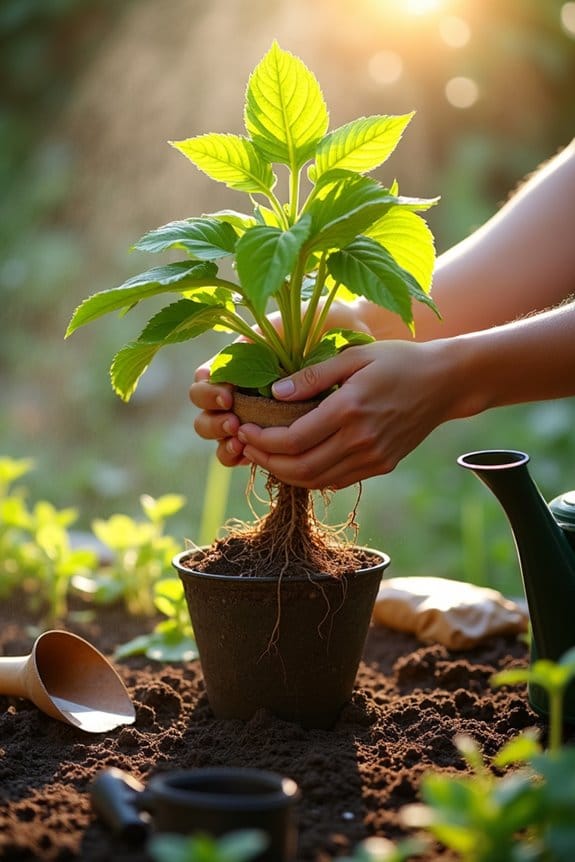
While your plant recovers from root rot, strengthening its root system becomes a vital priority for long-term health. You'll want to start by repotting your plant in well-draining soil that promotes healthy oxygen flow to the roots. During this process, consider applying rooting hormones to boost growth and disease resistance.
Keep a close eye on soil moisture levels by letting the top layer dry between waterings. This practice helps prevent root rot from recurring. To supercharge your plant's recovery, add beneficial mycorrhizal fungi to the soil – they'll enhance nutrient uptake and create stronger root structures. Don't forget about proper airflow and lighting conditions, as these factors play essential roles in developing robust roots. Regular monitoring and adjustments to these elements will help guarantee your plant develops a resilient root system.
Weekly Monitoring and Maintenance Plan
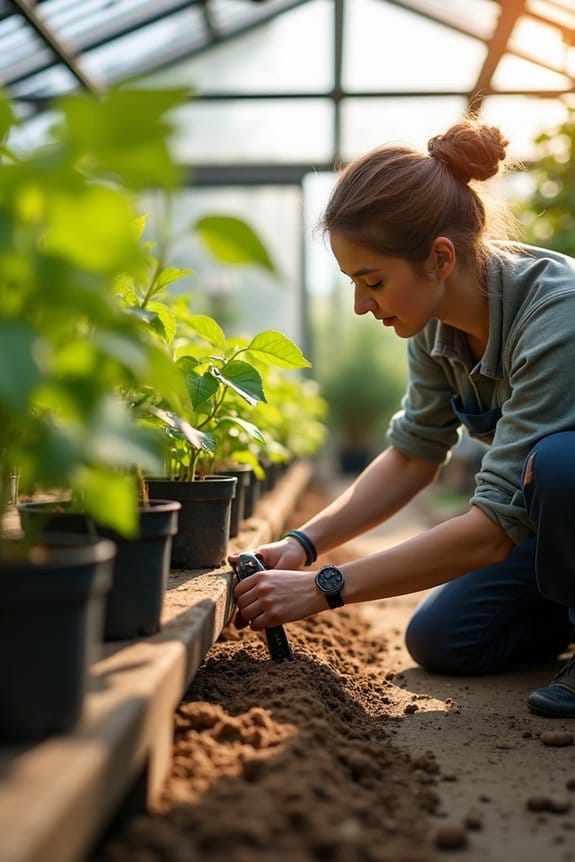
Once you've identified root rot in your plants, establishing a consistent weekly monitoring routine becomes essential for preventing future problems. Your weekly monitoring should focus on checking soil moisture and inspecting for signs of root issues. Remember to repot into fresh soil if you spot any concerns.
- You'll feel more confident when you check the top inch of soil before each watering
- You'll gain peace of mind by inspecting leaves weekly for yellowing or wilting
- You'll stay ahead of problems by examining your plants' roots monthly
- You'll protect your green friends by adjusting water schedules with the seasons
- You'll become a better plant parent by maintaining a detailed care journal
Track your watering dates and observations carefully. This data will help you spot patterns and prevent root rot before it becomes severe.
Frequently Asked Questions
Can a Plant Recover From Root Rot?
Yes, your plant can recover from root rot if you act quickly. Watch for signs of recovery like new growth, manage moisture levels carefully, and maintain healthy roots through proper drainage and consistent long-term care.
Can Hydrogen Peroxide Reverse Root Rot?
You can't fully reverse root rot with hydrogen peroxide, but it'll help prevent further damage. Apply a 1:1 ratio of 3% solution to water, improve soil drainage, and maintain proper watering for best recovery results.
How Do You Save Root Rot Without Repotting?
You're in quite the pickle! Remove excess soil, trim rotting roots, apply fungicide as preventive measures, and control moisture. Improve soil drainage and monitor environmental factors while maintaining plant nutrition through proper watering.
How to Encourage Root Growth After Root Rot?
To boost root health, guarantee proper soil aeration and maintain moisture balance. You'll want to prune damaged roots, use rooting hormone for better nutrient uptake, and provide bright indirect light for ideal growth.