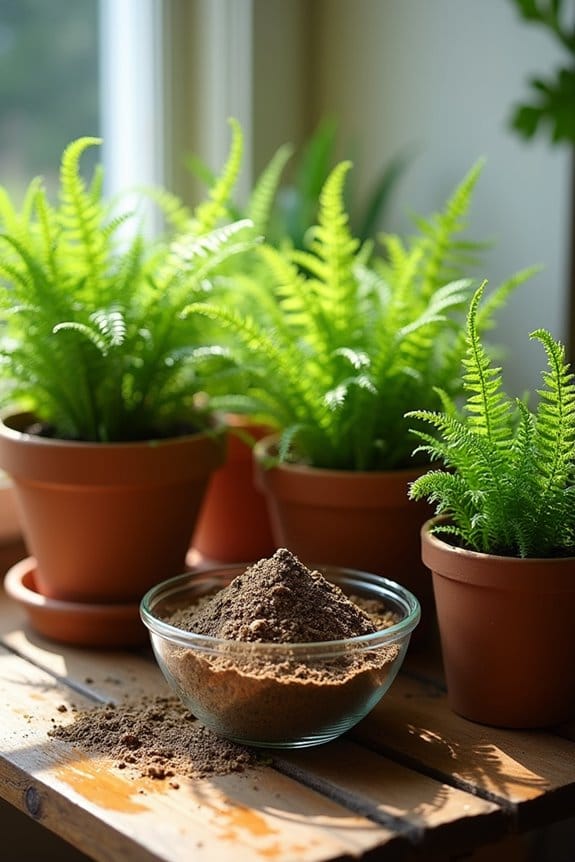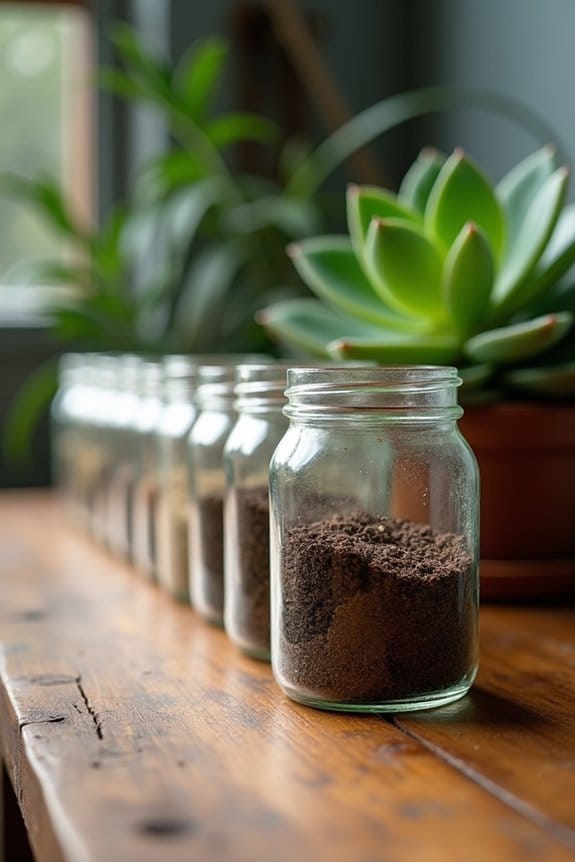

For healthy indoor succulents, you'll need specialized soil mixes that balance drainage and nutrients. Start with a 2:2:1 ratio of coarse sand, regular potting soil, and perlite as your base blend. For flowering varieties, increase organic material to 60% while maintaining drainage. Moisture-control mixes work well in apartments, combining 3 parts potting soil, 2 parts perlite, and 1 part sand. Fast-draining gritty mixes excel for windowsill plants. Exploring different ratios will help you perfect your succulent care technique.
Key Takeaways
- Classic 2:2:1 desert blend of coarse sand, potting soil, and perlite provides optimal drainage and nutrients for most indoor succulents.
- Moisture-control mix combining 3 parts potting soil, 2 parts perlite, and 1 part sand prevents root rot in apartment settings.
- Fast-draining gritty mix (2:1:1 sand, perlite, potting soil) is perfect for windowsill succulents exposed to varying light conditions.
- Organic-rich blend with 60% organic material plus perlite supports flowering succulents while maintaining essential drainage properties.
- Professional root-strengthening mix incorporating calcined clay, compost, and coarse sand promotes stable growth and proper aeration.
Essential Components of Premium Succulent Soil
You may be interested


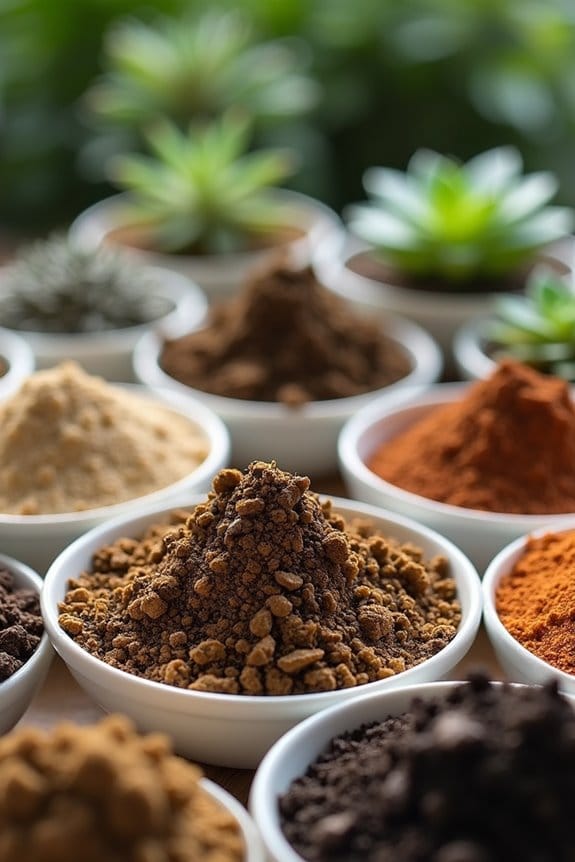
Success with indoor succulents starts with the right soil mix. Your succulent soil mix needs to prioritize drainage and aeration to prevent root rot, which means combining specific ingredients in the right proportions.
You'll want to start with a 2:2:1 ratio of three essential components: coarse sand, regular potting soil, and either perlite or pumice. The coarse sand guarantees well-draining soil, while perlite or pumice creates crucial air pockets. If you're using perlite, you'll find it's lighter and more budget-friendly, though pumice offers superior drainage without floating up during watering.
Consider adding organic materials like peat moss to provide nutrients while maintaining proper drainage. You can adjust these ratios based on your indoor growing conditions and specific succulent needs, creating a custom soil mix for succulents that thrives in your space.
Classic Desert Blend for Indoor Cacti
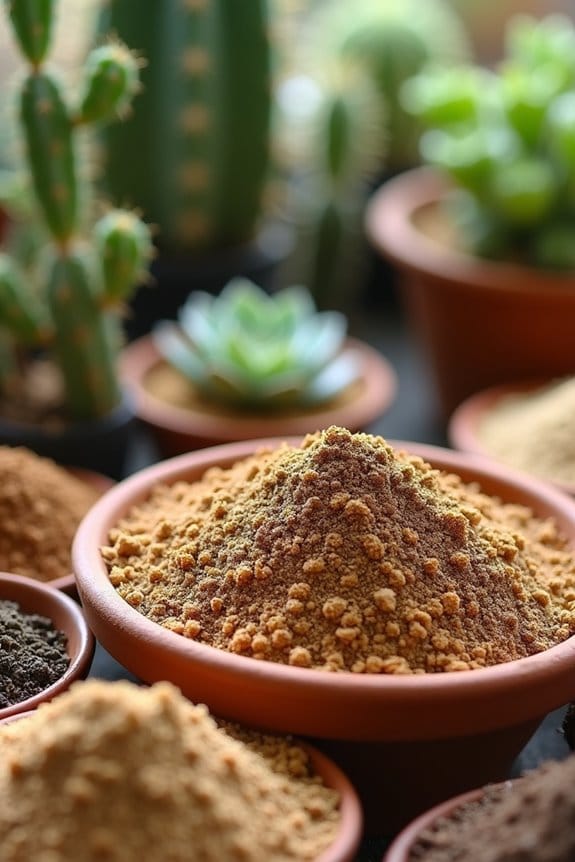
When your indoor cacti need a soil environment that mirrors their desert origins, the Classic Desert Blend delivers exceptional results. You'll want to mix two parts coarse sand, two parts potting soil, and one part perlite to create the perfect growing medium that guarantees excellent drainage while maintaining proper nutrient retention.
This tried-and-true blend creates ideal low-moisture conditions that cacti love. The coarse sand provides weight and stability, while perlite increases aeration and prevents soil compaction. You're fundamentally recreating desert-like growing conditions right in your home. Don't forget to use pots with drainage holes when working with this mix – it's vital for preventing water accumulation at the roots. For even better results, you can add pumice or extra grit to enhance the soil's drainage capabilities.
Recommended Products

FEEDS UP TO 6 MONTHS: Miracle-Gro Potting Mix is a gardening soil for outdoor containers that feeds all types of potted plants, including flowers, vegetables, shrubs, annuals, and perennials for up to 6 months

Coarse Horticultural Perlite: 4 pack large-grade perlite designed for potting soil, seed starting, propagation, hydroponics, organic gardening, and specialty plant mixes

NATURAL, ORGANIC INGREDIENTS: Made of 100% organic ingredients, this organic potting soil is free from synthetic fertilizers and chemicals. This planting soil gives your plants everything they need. Perfect for soil for indoor plants and outdoor potting soil.
Moisture-Control Mix for Apartment Growing
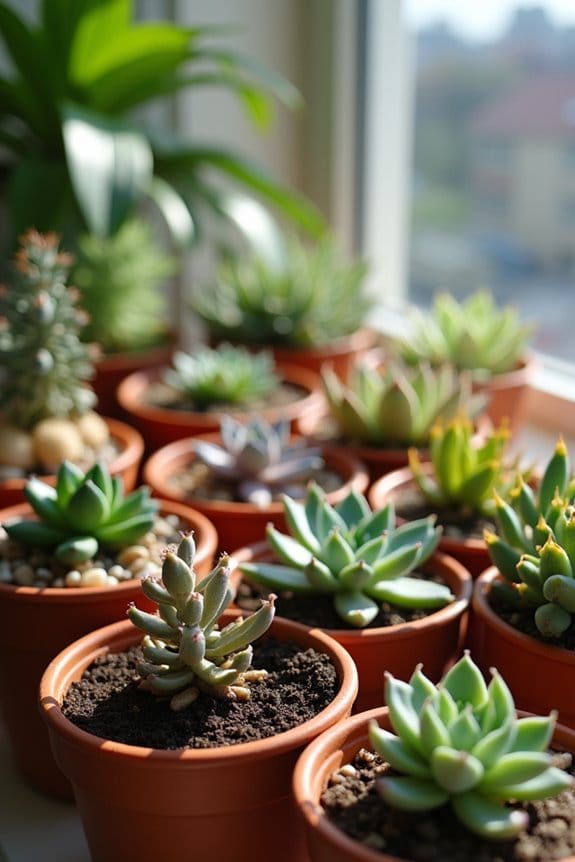
Growing succulents in an apartment requires a specialized soil mix that can handle indoor moisture challenges. You'll want a growing medium that balances moisture retention and drainage to prevent your plants from becoming waterlogged and developing root rot.
Create your own moisture-control mix by combining 3 parts potting soil with 2 parts perlite and 1 part coarse sand. This ratio guarantees proper aeration while maintaining peak succulent health in variable indoor conditions. If you prefer ready-made options, look for pH-balanced commercial blends containing coconut coir and other organic materials.
Remember to monitor your indoor succulents regularly, even with moisture-control mixes. While these specialized blends help prevent over-watering, they aren't foolproof. Check soil moisture levels before watering by inserting your finger about an inch into the soil.
Fast-Draining Gritty Mix for Windowsill Plants
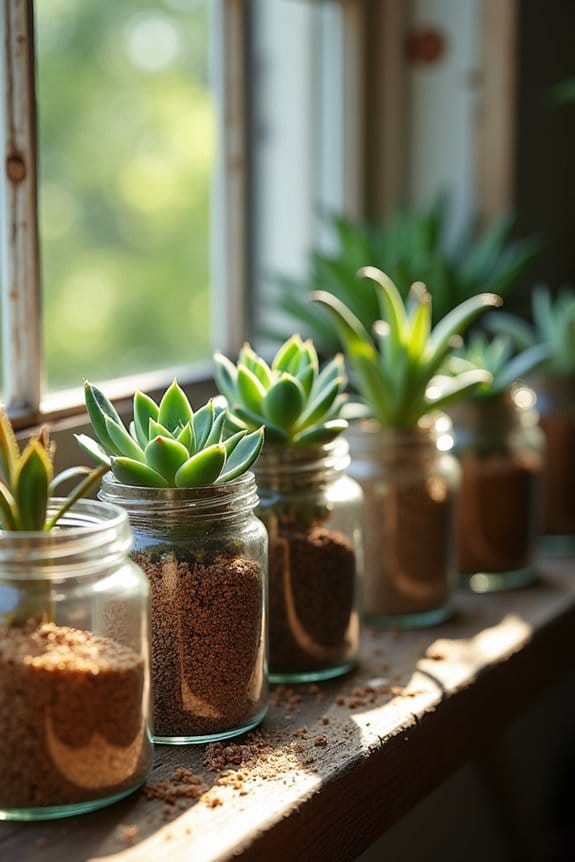
Because windowsill succulents face unique exposure challenges, they'll need an extra gritty soil mix to thrive in their sun-drenched location. You'll want to create a fast-draining mixture using 2 parts coarse sand, 1 part perlite, and 1 part potting soil as your foundation.
This gritty mix prevents water from lingering around your indoor succulents' roots, which is vital for preventing rot. The combination of inorganic materials like perlite enhances both drainage and aeration, giving your plants' roots the oxygen they need. While this soil mix drains quickly, you'll need to monitor moisture levels more frequently than with traditional potting soil. Watch your plants for signs of thirst, and adjust your watering schedule accordingly. This extra attention guarantees your windowsill succulents maintain healthy root systems year-round.
Recommended Products

You will receive (6) 2-cubic foot bags per purchase.

FAST-DRAINING GRITTY MIX: Specially formulated cactus soil potting mix for indoor plants with pumice, granite, coconut coir, and calcined clay to boost aeration and prevent root rot.
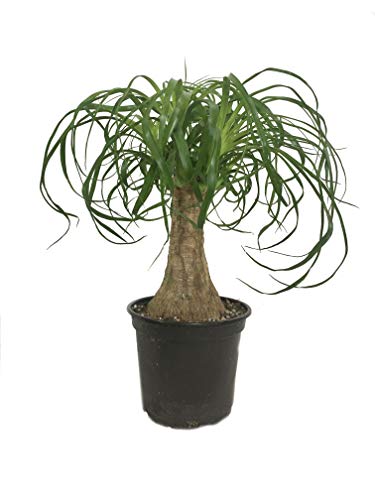
The common characteristics of this plant include a bulbous trunk, which is used to store water, and its long, hair-like leaves that grow from the top of the trunk like a ponytail, giving the plant its renowned name.
Low-Maintenance Soil Blend for Beginners
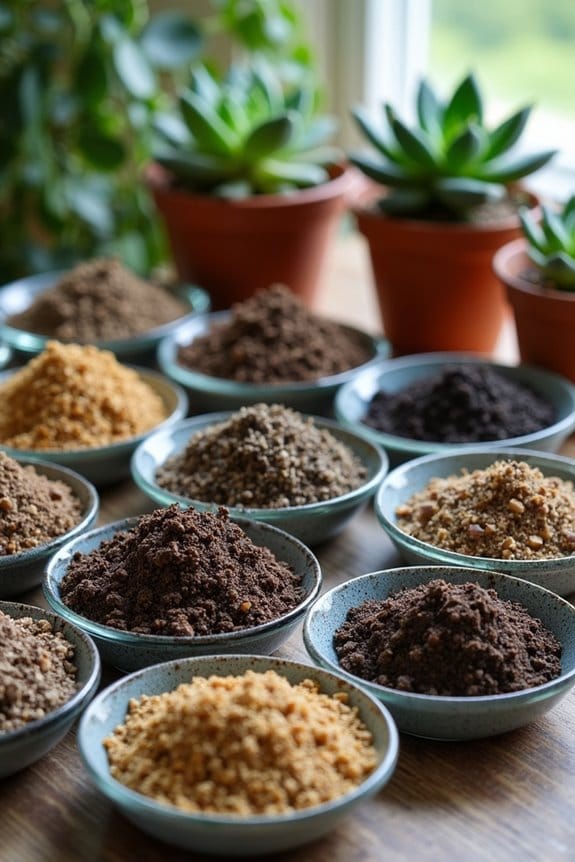
While experienced gardeners might prefer complex soil formulations, beginners can start their succulent journey with a simple yet effective soil blend. Your succulent potting soil should focus on fast-draining blends that promote indoor succulent health while avoiding moisture-retaining soils that can harm your plants.
Here's what you'll need for an ideal homemade blend:
- 60% organic materials (peat moss or coconut coir)
- 40% inorganic materials (perlite or pumice)
- Equal parts potting mix and coarse sand
- Materials that facilitate proper drainage
- Components that allow for easy soil testing
This straightforward soil mixture provides the perfect balance for your plants. You'll know you've got the right potting mix when it crumbles easily in your hand. If you're not ready to create your own blend, pre-made options like Miracle-Gro's Cactus Mix offer a reliable alternative.
Organic Rich Mix for Flowering Succulents
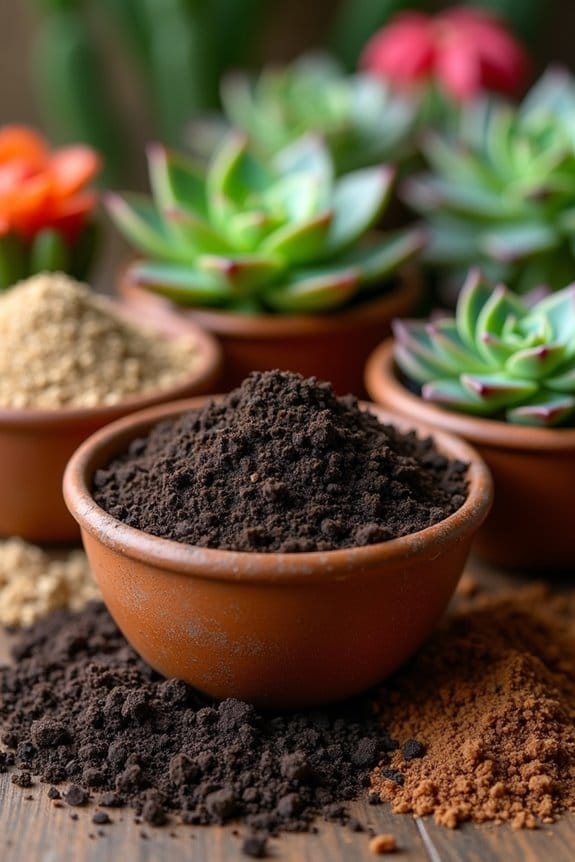
Flowering succulents thrive in organic-rich soil that's specially formulated to support their blooming needs. You'll want to create a mix that's about 60% organic material, combining compost, peat moss, and coconut coir for ideal nutrient delivery.
To guarantee adequate drainage and prevent root rot, mix one part perlite to every two parts of your organic material. This ratio provides the perfect balance of moisture retention and good drainage that your flowering succulents need. You'll also want to maintain a slightly acidic to neutral soil mix, with pH levels between 6.0 and 7.0. Don't forget to fertilize your plants once or twice yearly with a diluted water-soluble solution to meet their nutrient needs during the blooming season.
Year-Round Indoor Growing Medium
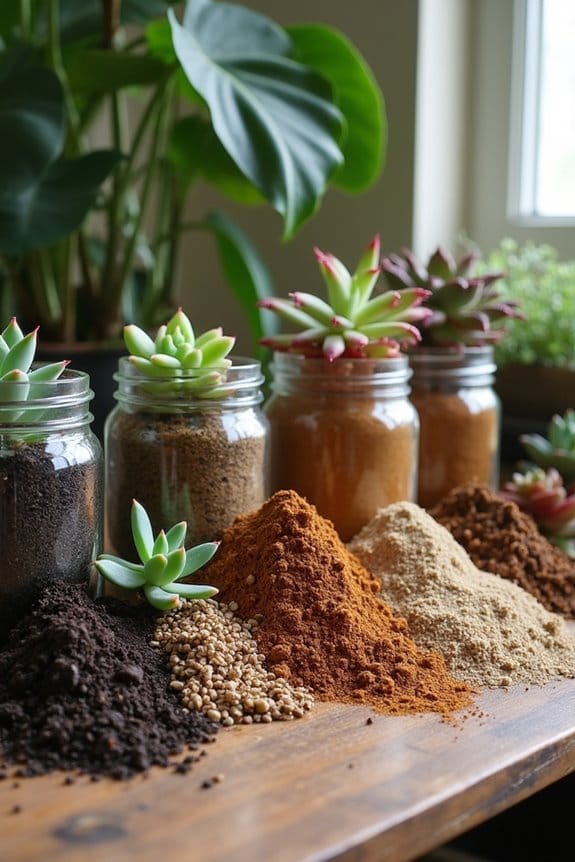
Indoor succulents need a specialized growing medium that works well throughout all seasons. The best soil for succulents combines well-draining soil with proper moisture retention. You'll want to create a potting mix that prevents root rot while providing essential aeration for your plants.
Growing healthy indoor succulents starts with choosing the right soil mix that balances drainage and moisture while preventing root problems.
- Mix 3 parts regular potting soil with 2 parts coarse sand
- Add 1 part perlite or pumice for ideal drainage
- Consider using commercial mixes like Miracle-Gro Premium Peat-Free
- Create homemade soil mixes by combining equal parts loam compost, sharp sand, and perlite
- Monitor soil moisture regularly and adjust based on indoor conditions
Whether you choose a commercial mix or make your own, guarantee your indoor succulents have proper drainage. You can customize these ratios based on your specific plants' needs and your home's environment.
Recommended Products

Ready-to-Use for All Planting Needs: This general-purpose potting mix is ready to use out of the bag, making it perfect for both indoor and outdoor planting without any additional preparation

Organic Compost Blend: Enhance the nutrient content and soil quality of lawns and raised garden beds with this organic blend, promoting healthy plant growth and soil vitality

MULTI-USE POT: Our timeless and modern plant pots are ideal for your indoor space or your outdoor deck, patio, or balcony. They effortlessly complement any design style and elevate the look of potted real or faux greenery.
Space-Saving Container Soil Formula

Space-saving containers demand a specialized soil formula that's perfectly balanced for your compact succulent garden. You'll want to create a lightweight mix that promotes healthy root growth while preventing water retention in your limited growing space.
The ideal indoor succulent mix combines 2 parts potting soil and 2 parts coarse sand with 1 part perlite. This well-draining combination guarantees your space-saving containers won't become waterlogged. For an even lighter option, replace traditional organic matter with coconut coir, which helps maintain proper moisture levels without adding extra weight.
When using these space-saving formulas, you'll need to monitor your plants more frequently since smaller containers dry out faster. Consider using pre-made mixes like Miracle-Gro's Premium Peat-Free Cactus mix if you're short on mixing space or time.
Root-Strengthening Professional Blend
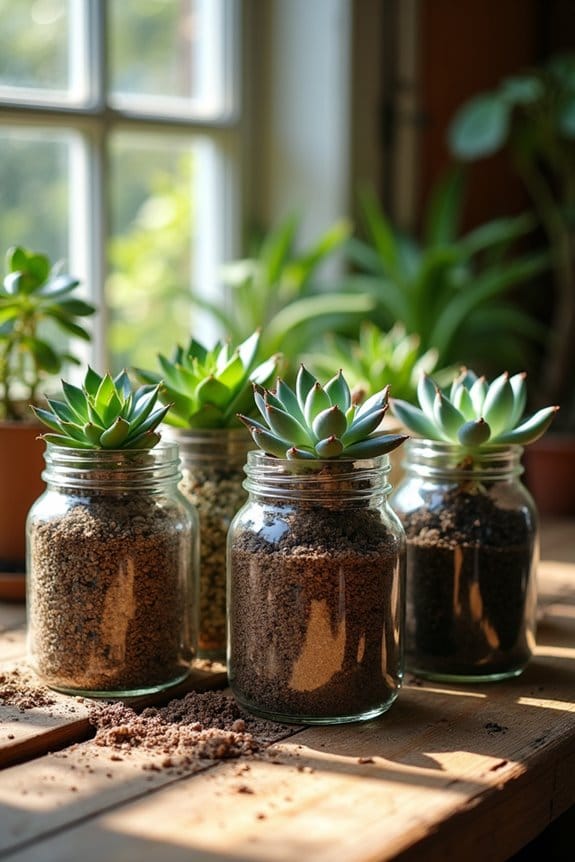
Professional growers rely on specialized root-strengthening blends to develop robust succulent root systems. You'll want to create a professional blend using a 3:2:1 ratio of coarse sand, potting soil, and perlite to guarantee ideal drainage and aeration for your succulent roots. This mixture prevents water retention while promoting healthy root growth.
Key components of a root-strengthening professional blend:
- High-quality calcined clay for stable root development
- Organic materials like compost for essential nutrients
- Coarse sand to enhance drainage capabilities
- Perlite or pumice to improve soil porosity
- Professional-grade potting soil as a base medium
To test your blend's effectiveness, wet a handful and squeeze it into a ball. If it crumbles easily, you've achieved the perfect mix for your indoor succulents. This blend will help prevent root rot while encouraging strong root development.
Small-Space Urban Garden Mix
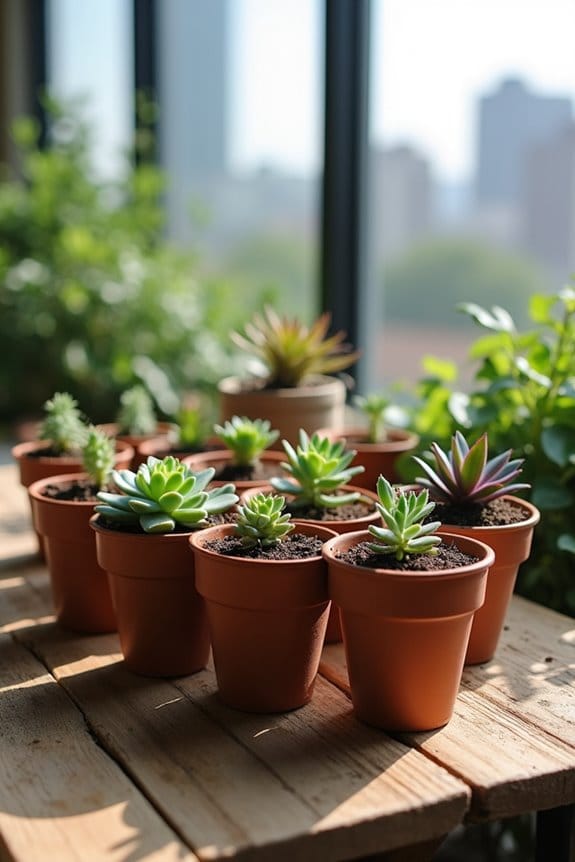
When living in compact urban spaces, you'll need a specialized soil mix that maximizes your succulents' health while minimizing storage needs. For healthy indoor succulents, combine two parts coarse sand with two parts potting mix and one part perlite for ideal drainage and aeration.
In your small-space garden, consider switching traditional materials with space-saving alternatives. Replace bulky peat moss with coconut coir, which offers excellent moisture retention without taking up extra room. Choose compact pots with drainage holes, and verify they're filled with this well-draining mixture to prevent root rot. The addition of inorganic materials like perlite or pumice will keep your soil from compacting, giving your succulents' roots the breathing room they need. This balanced mix delivers professional results while respecting your limited urban gardening space.
Frequently Asked Questions
What Is the Best Soil for Succulents Indoors?
You'll want a well-draining mix of coarse sand, potting soil, and perlite (2:2:1 ratio) for your indoor succulents. This guarantees proper moisture control, supports root health, and adapts to varying indoor humidity levels.
What Potting Mix for Indoor Succulents?
You'll need a well-draining mix with organic materials and balanced pH. Use either homemade mixes (2:2:1 soil/sand/perlite) or commercial cactus blends. Avoid moisture-retaining soils when repotting to prevent root problems.
What Is the Best Brand of Succulent Soil?
You'll find Perfect Plants All Natural Succulent and Cactus Soil Mix is the best pre-mixed blend, offering superior drainage and aeration. It's an organic potting mix that perfectly balances moisture retention and nutrient content.
What Is a Good Soil Conditioner for Succulents?
You'll access gardening superpowers with perlite, pumice, or coco coir! These soil conditioners improve drainage, while coarse sand and well-aged compost enhance nutrient retention. Remember, proper pH balance keeps your succulents thriving.